
Prevent Electrocution, Gas Exposure, And Confined-space Incidents During Field And Plant Work.

Utility safety is the disciplined management of hazards associated with electrical, gas, water, and renewable energy operations, including fieldwork, switching, confined spaces, and chemical handling. It matters because it prevents injuries and outages, ensures compliance with codes and permits, and protects critical infrastructure and the public.
A professional with strong utility safety can:

Conduct Job Hazard Analyses And Issue Permits-to-work For Tasks Such As Isolation, Excavation, And Confined-space Entry.
Apply Lockout/tagout, Switching Procedures, And Verification Of De-energization Before Maintenance Or Repairs.
Inspect Sites For Compliance With PPE, Fall Protection, Trench Safety, And Hazardous Energy Controls.
Investigate Incidents And Near-misses, Then Implement Corrective Actions Such As Procedure Updates And Retraining.
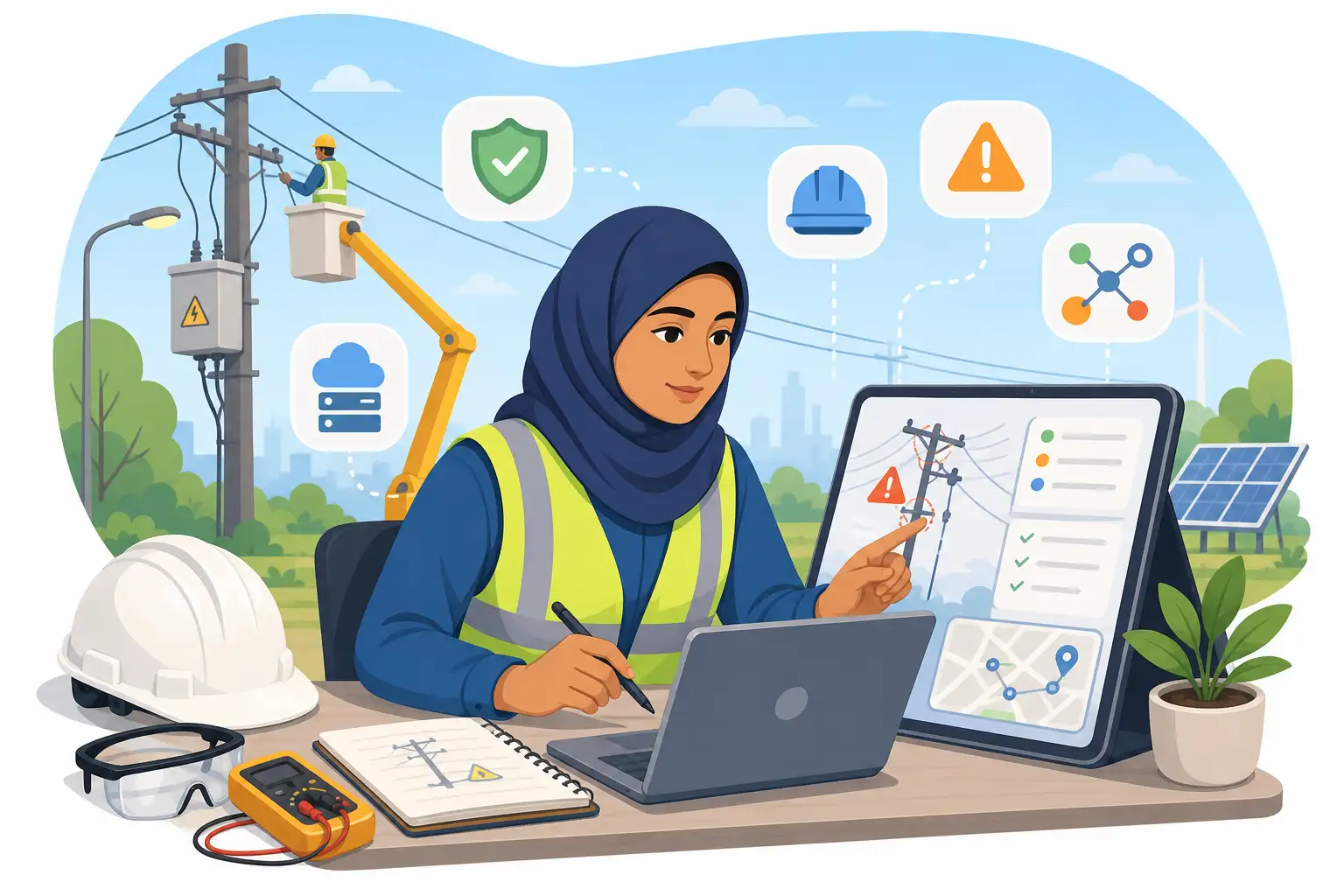
Prevent Electrocution, Gas Exposure, And Confined-space Incidents During Field And Plant Work.
Maintain Safe Isolation And Switching So Maintenance Does Not Trigger Outages Or Equipment Damage.
Meet Permit, Code, And Inspection Requirements For Excavation, Lifting, And Hazardous Energy Control.
Investigate Near-misses And Incidents To Update Procedures And Retrain Crews On Recurring Hazards.

Renewable Energy (Wind, Solar, Hydro, Etc.)
Utilities (Electric Power & Water)
Construction & Civil Engineering
Environmental Services & Waste Management
Scientific & Research Organizations
Government & Public Administration

Renewable Project Engineer
Energy Analyst
Solar PV Technician
Wind Turbine Technician
Grid Operations Manager
Power Systems Engineer
Utility Compliance Officer
Water Treatment Operator
Job Hazard Analysis (JHA/JSA) And Permit-to-work Issuance For High-risk Tasks.
Lockout/tagout And Electrical Switching Practices, Including Test-before-touch Verification.
Confined-space Entry Controls, Gas Testing, Ventilation, And Rescue Planning.
PPE Selection And Field Compliance Checks For Arc Flash, Fall Protection, And Trenching.
Incident Investigation Methods, Root-cause Analysis, And Corrective Action Tracking.