
Translate Growth Forecasts Into Zoning And Land-use Allocations That Prevent Incompatible Development.

Urban planning is the practice of shaping land use, transport, utilities, and public space to support safe, livable, and economically viable communities. It matters because good plans balance growth with environmental constraints, coordinate infrastructure investment, and reduce long-term cost and risk from congestion and incompatible development.
A professional with strong urban planning can:

Develop Land-use And Zoning Proposals Using Demographic Forecasts, Housing Demand, And Employment Patterns.
Model Traffic, Transit, And Pedestrian Impacts To Define Street Networks, Parking Strategy, And Mobility Upgrades.
Coordinate Infrastructure Requirements For Water, Power, Drainage, And Waste To Match Phased Development.
Prepare Planning Submissions And Community Consultation Materials To Secure Approvals And Address Stakeholder Concerns.
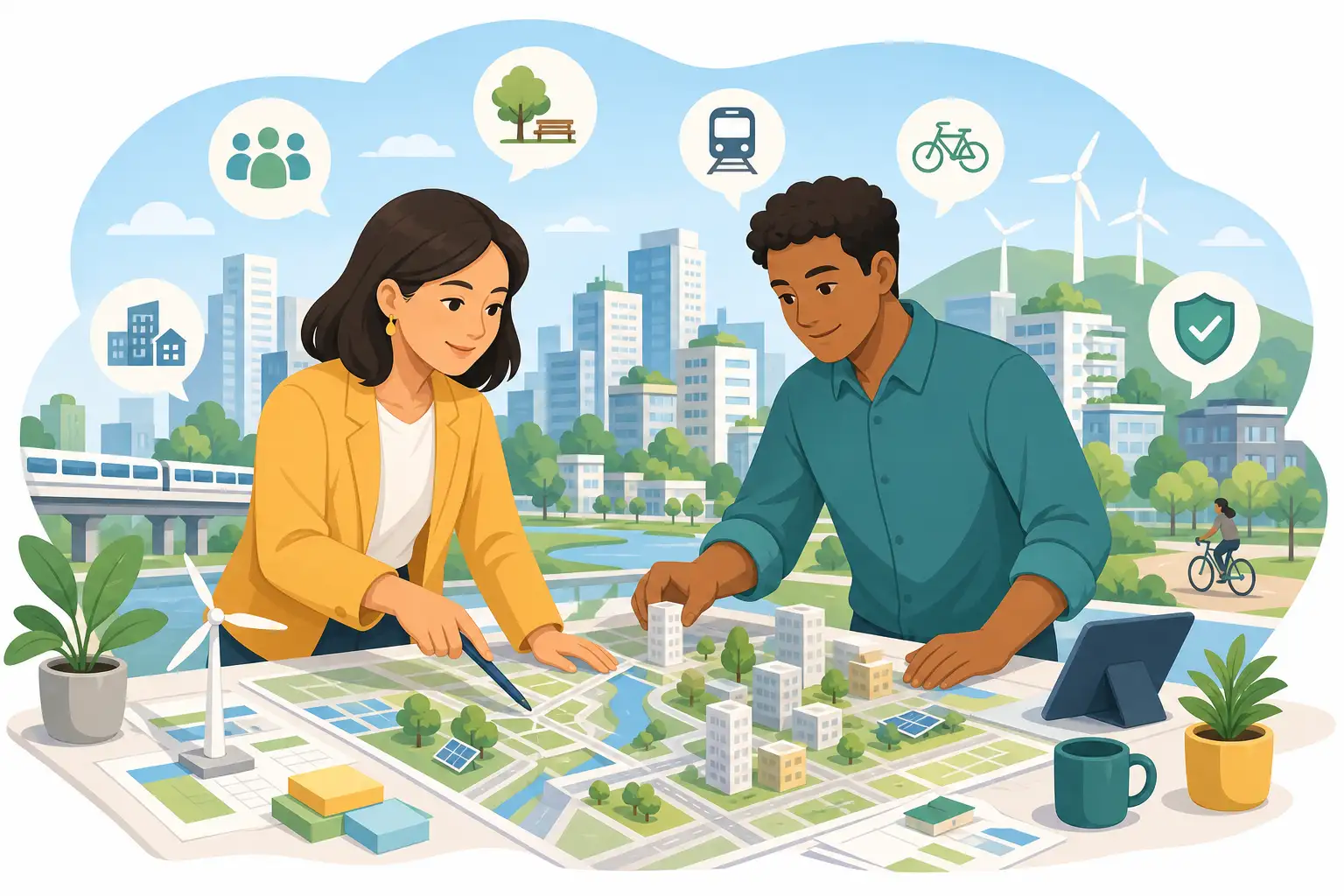
Translate Growth Forecasts Into Zoning And Land-use Allocations That Prevent Incompatible Development.
Model Traffic And Multimodal Demand To Size Streets, Transit, And Parking Before Congestion Is Locked In.
Coordinate Utilities And Drainage With Phasing So New Areas Have Water, Power, And Waste Capacity On Time.
Produce Submissions And Consultation Materials That Secure Approvals And Reduce Planning Objections.

Construction & Civil Engineering
Real Estate & Property Management
Utilities (Electric Power & Water)
Government & Public Administration
Consulting & Professional Services
Environmental Services & Waste Management

Civil Engineer
Construction Project Manager
Quantity Surveyor
Site Supervisor
Structural Designer
Property Manager
Facilities Manager
Real Estate Development Manager
Zoning Codes, Development Control Plans, And Statutory Planning Procedures.
GIS Mapping And Spatial Analysis For Land-use, Constraints, And Service Catchments.
Transport Planning Tools And Methods For Trip Generation And Level-of-service Analysis.
Infrastructure Capacity Planning For Water, Sewer, Power, Stormwater, And Solid Waste.
Community Engagement Techniques For Public Meetings, Feedback Capture, And Stakeholder Responses.