
Capture Legible Procedure Footage In Low-light, High-glare, Or Noisy Shop-floor Environments.

Television and video production fundamentals include planning shoots, capturing audio and video, managing lighting, and assembling footage into clear, accurate content. In technical and industrial settings, they enable teams to document procedures, communicate findings, and create training or incident videos that reduce rework and improve safety.
A professional with strong television & video production fundamentals can:

Select Camera Settings, Lenses, Lighting, And Microphones To Capture Clear Footage In Noisy Or Low-light Production Environments.
Build A Shot List And Basic Storyboard That Aligns With Technical Steps, Hazards, And Acceptance Criteria.
Edit And Package Deliverables With Correct Pacing, Titles, Callouts, And Audio Levels For Training, Audits, Or Stakeholder Updates.
Manage Media Workflows By Organizing Files, Backups, And Export Formats/codecs To Meet Platform And Playback Requirements.
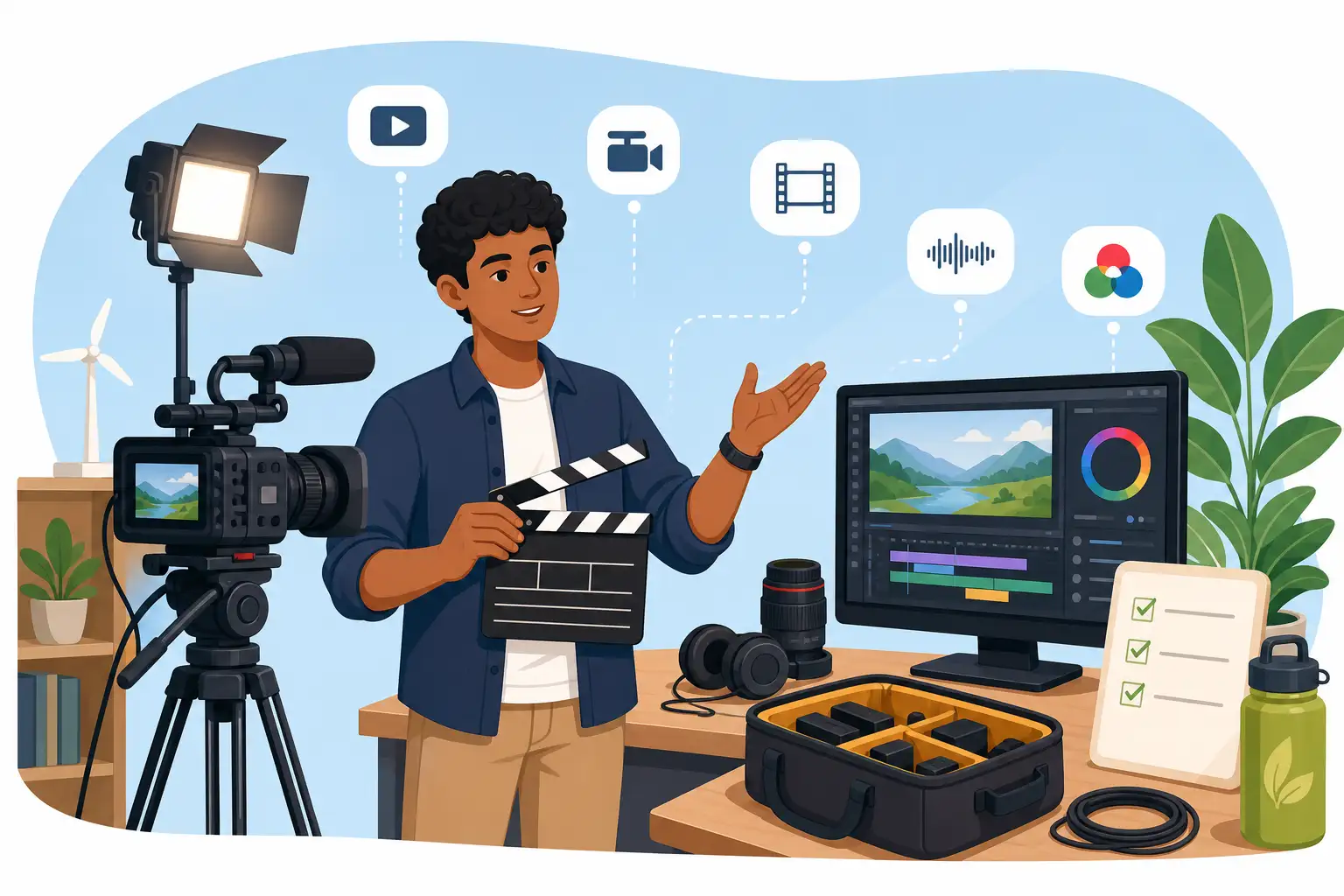
Capture Legible Procedure Footage In Low-light, High-glare, Or Noisy Shop-floor Environments.
Document Hazards And Critical Steps With The Right Angles And Callouts For Safety And Audit Use.
Produce Training Clips With Consistent Audio Levels, Titles, And Pacing That Match Work Instructions.
Deliver Compatible Exports And Backups So Incident Or Test Evidence Is Usable Across Platforms.

Automotive Manufacturing
Electronics & Electrical Manufacturing
Machinery & Heavy Equipment Manufacturing
Utilities (Electric Power & Water)
Information Technology & Software
Scientific & Research Organizations

Manufacturing Engineer
Mechanical Design Engineer
Industrial Automation Engineer
Maintenance Engineer
Plant Manager
Quality Engineer
Electrical Engineer
Electronics Test Engineer
Camera Operation And Exposure Control (frame Rate, Shutter, ISO, White Balance).
Lighting Setup For Industrial Spaces (three-point Basics, Diffusion, Color Temperature).
Location Audio Capture (lavaliers/shotguns, Gain Staging, Noise Reduction).
Editing Workflows And Standards (timelines, Captions/callouts, Loudness Targets).
Media Management And Delivery Formats (codecs, Bitrates, File Naming, Backups).