
Targets Fertilizer And Lime Rates Using Measured PH And Nutrient Levels Instead Of Guesswork.

Soil analysis involves sampling, testing, and interpreting soil properties such as pH, nutrients, texture, salinity, and organic matter to understand fertility and constraints. It guides precise amendments and crop decisions, protects yields, and supports environmental compliance by preventing over-application and runoff.
A professional with strong soil analysis can:

Collect Representative Soil Samples Using Correct Depths, Locations, And Chain-of-custody Procedures For Laboratory Testing.
Interpret Test Results To Diagnose Nutrient Deficiencies, PH Imbalance, Compaction, Or Salinity Risks Affecting Crop Performance.
Develop Fertilizer And Lime Recommendations With Application Rates And Timing Matched To Crop Needs And Local Regulations.
Track Soil Test Trends Over Seasons To Evaluate Management Impacts And Adjust Inputs For Cost And Sustainability.
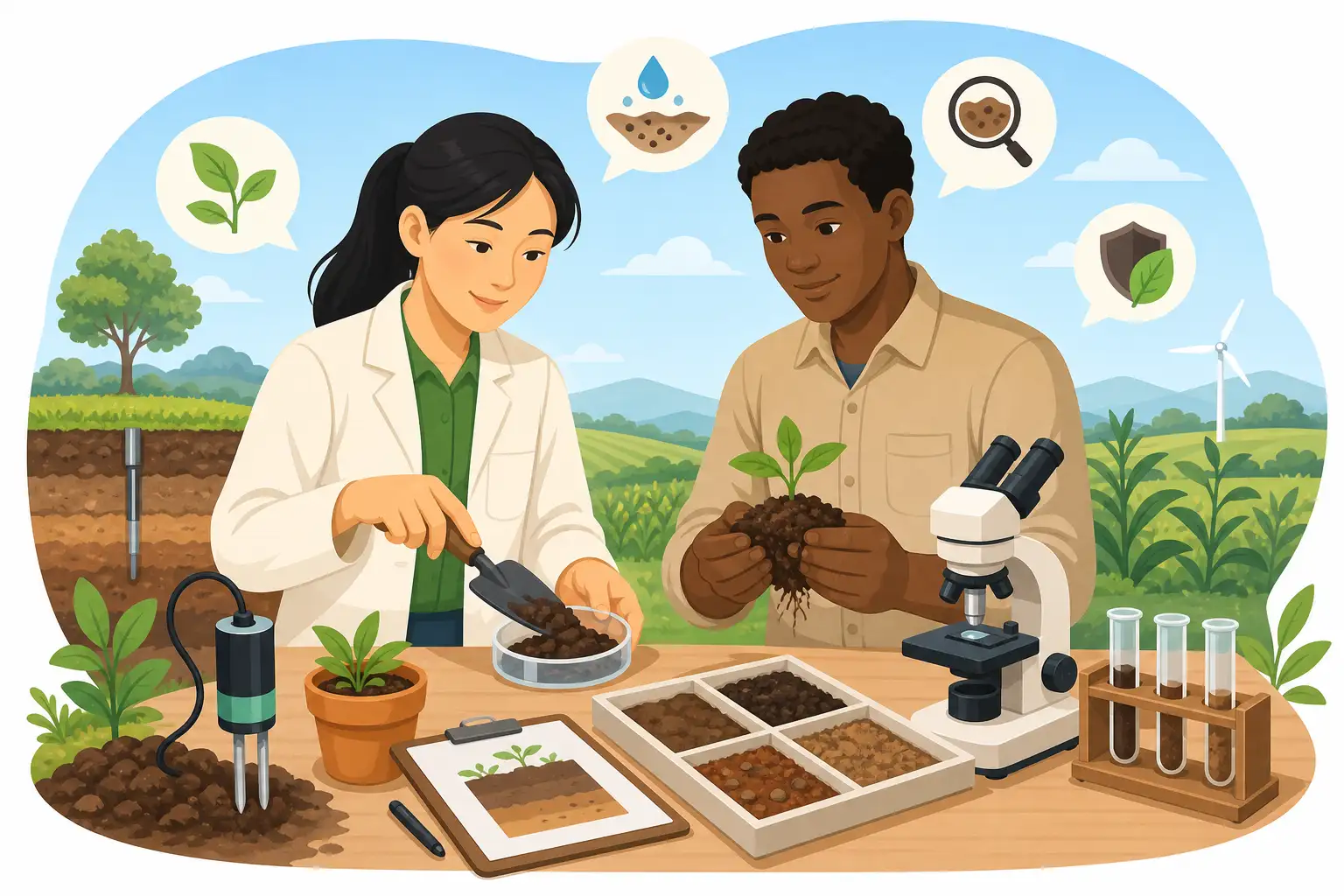
Targets Fertilizer And Lime Rates Using Measured PH And Nutrient Levels Instead Of Guesswork.
Identifies Salinity, Compaction, Or Texture Limitations That Can Restrict Roots And Reduce Yield.
Prevents Over-application That Can Trigger Runoff Violations And Nutrient Leaching Costs.
Tracks Soil Trends Across Seasons To Verify Whether Management Changes Are Improving Fertility.

Agriculture & Agribusiness
Food & Beverage Manufacturing
Environmental Services & Waste Management
Scientific & Research Organizations
Government & Public Administration
Logistics & Supply Chain Management

Farm Manager
Agronomist
Agricultural Engineer
Crop Consultant / Agricultural Advisor
Agribusiness Supply Chain Manager
Agricultural Research Scientist
Sustainability Manager
Food Technologist
Representative Soil Sampling Plans, Depth Control, And Chain-of-custody Handling.
Laboratory Test Selection And Interpretation (pH, CEC, OM, Macro/micronutrients, Salinity).
Fertilizer And Liming Recommendation Calculations By Crop Removal And Local Guidelines.
Use Of Precision Ag Tools For Zone Sampling, GPS Tagging, And Variable-rate Maps.
Recordkeeping And Trend Analysis Of Soil Tests Across Fields, Crops, And Seasons.