
Keeps High-traffic Systems Stable By Choosing Patterns That Meet Latency, Throughput, And Availability Targets.

Software architecture is the practice of designing a system’s structure—components, data flows, interfaces, and deployment—to meet performance, security, scalability, and maintainability needs. It aligns technical decisions with business goals, reduces failure risk, and enables teams to build and change software predictably over time.
A professional with strong software architecture can:

Define Architectural Patterns And Service Boundaries (e.g., Monolith, Microservices, Event-driven) Based On Workload And Operational Constraints.
Specify API Contracts, Data Models, And Integration Mechanisms To Ensure Reliable Communication Between Systems.
Design Non-functional Requirements Such As Resilience, Observability, Security Controls, And Capacity Targets Into The Platform.
Create Architecture Diagrams And Decision Records That Guide Implementation And Standardize Technology Choices Across Teams.
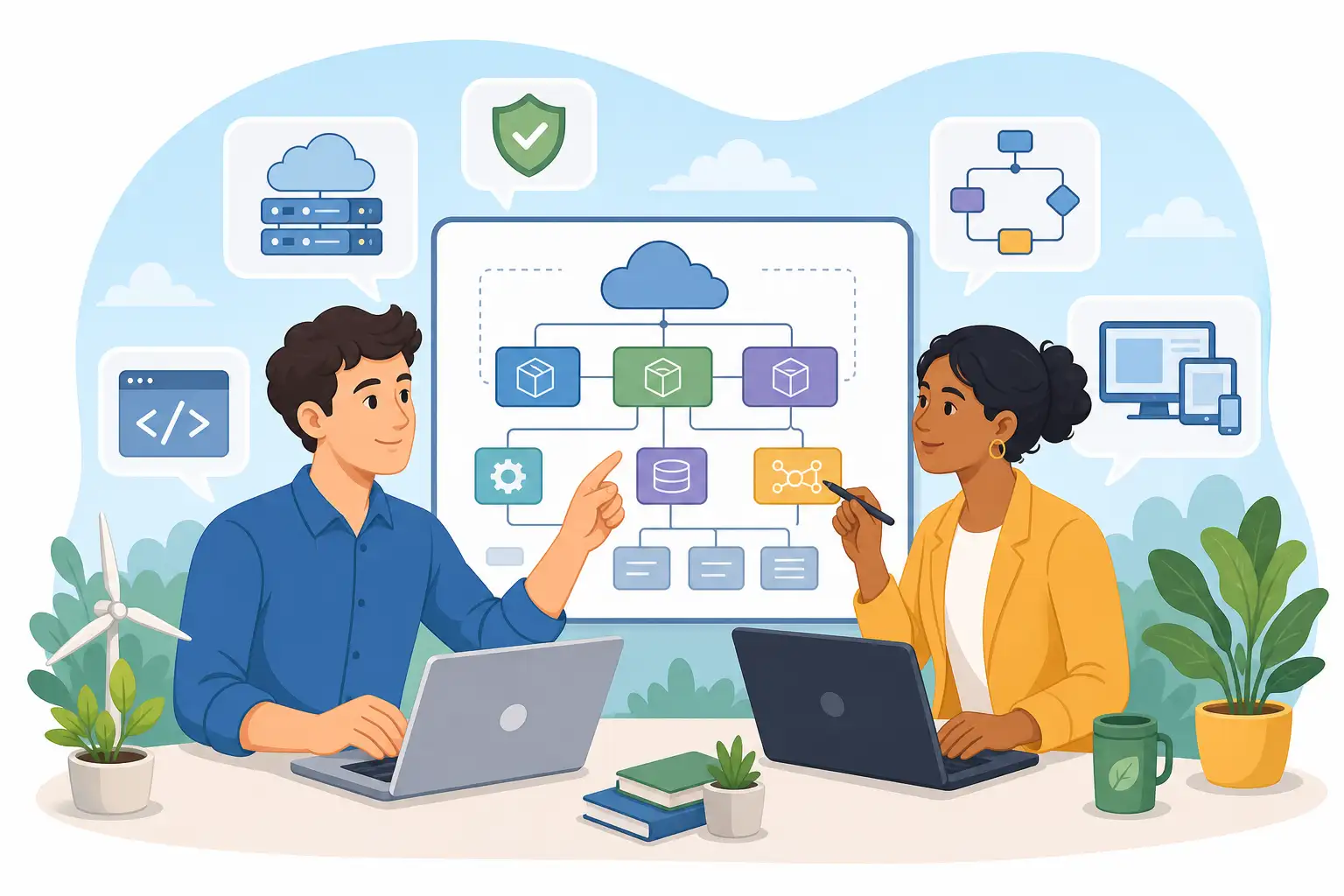
Keeps High-traffic Systems Stable By Choosing Patterns That Meet Latency, Throughput, And Availability Targets.
Enables Secure Integrations By Defining API Contracts, Auth Flows, And Trust Boundaries Upfront.
Controls Cloud And Infrastructure Costs By Designing For Capacity, Scaling Strategy, And Data Placement.
Makes Large Codebases Changeable By Enforcing Service Boundaries, Ownership, And Deployment Topology.

Information Technology & Software
Data Science & Artificial Intelligence
Consulting & Professional Services
Banking & Financial Services
Scientific & Research Organizations
Cybersecurity & IT Security

Data Scientist
Data Engineer
BI Developer
Machine Learning Engineer
AI Research Scientist
Software Engineer
Systems Analyst
Business Analyst
Architectural Patterns Selection (monolith, Microservices, Event-driven, CQRS) And Trade-off Analysis.
API Design And Specification Using OpenAPI/AsyncAPI With Versioning And Backward Compatibility.
Data Modeling And Storage Selection Across Relational, NoSQL, And Streaming Systems.
Resilience And Observability Design Using SLOs, Tracing, Metrics, And Structured Logging.
Security Architecture Practices Including Threat Modeling, IAM, Encryption, And Secrets Management.