
Detects Off-notes And Texture Defects Before Full-scale Release Or Customer Complaints.

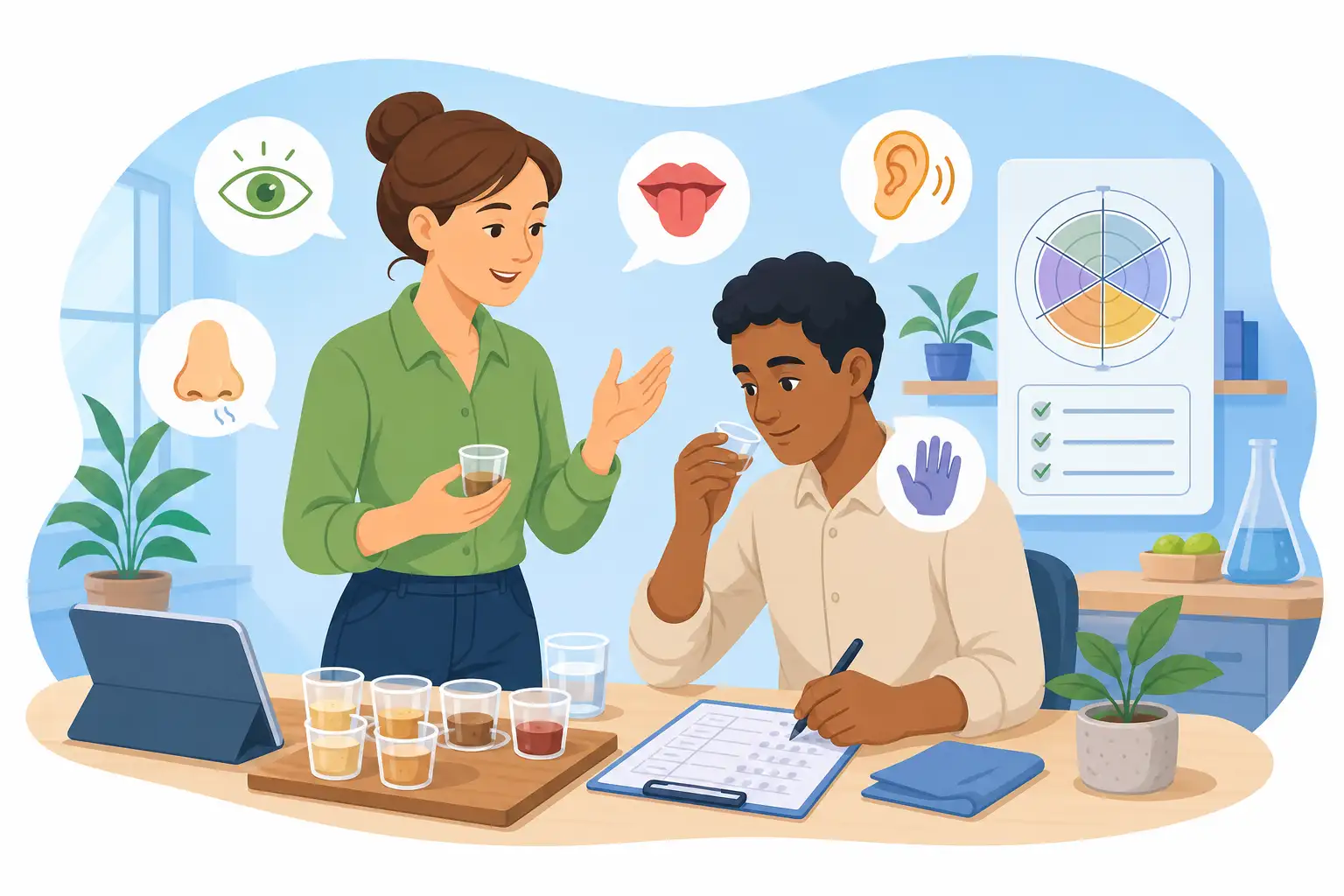
Sensory analysis is the structured measurement of taste, aroma, texture, and appearance using trained panels or controlled consumer tests. It matters in food and consumer goods because it links product changes to perceived quality, supports consistent manufacturing, and helps detect defects before they reach customers.
A professional with strong sensory analysis can:

Design Sensory Test Protocols (e.g., Triangle, Ranking, Descriptive Analysis) Aligned To The Product Question And Risk Level.
Train Panelists And Calibrate Reference Standards To Improve Repeatability Of Aroma, Flavor, And Texture Ratings.
Analyze Sensory Data With Appropriate Statistics To Compare Batches, Formulations, Or Shelf-life Stages.
Translate Findings Into Formulation Or Process Adjustments, Such As Balancing Sweetness, Reducing Off-notes, Or Improving Mouthfeel.
Detects Off-notes And Texture Defects Before Full-scale Release Or Customer Complaints.
Validates Formulation Changes By Quantifying How Taste And Aroma Shifts Are Perceived Batch To Batch.
Supports Shelf-life And Packaging Choices By Tracking Sensory Drift Over Storage Conditions.
Improves Manufacturing Consistency By Linking Sensory Scores To Process Variables And Ingredient Lots.

Food & Beverage Manufacturing
Food Service & Restaurants
Hospitality (Hotels & Lodging)
Tourism & Leisure
Consumer Packaged Goods (FMCG)
Logistics & Supply Chain Management

Food Technologist
Quality Assurance Manager
R&D Product Developer
Catering Manager
Chef
Restaurant Manager
Hotel Operations Manager
Travel Consultant
Sensory Test Design Using Triangle, Ranking, Hedonic, And Descriptive Methods.
Panel Training, Calibration, And Reference Standard Preparation.
Statistical Analysis For Sensory Data Including ANOVA And Multivariate Methods.
Sample Preparation, Blinding, Randomization, And Controlled Serving Conditions.
Translation Of Sensory Findings Into Formulation, Flavor, And Process Adjustments.