
Prevents Catastrophic Energy Releases By Enforcing Lockout/tagout And Isolation Verification.

Safety systems are the structured controls that prevent, detect, and mitigate workplace hazards through engineered safeguards, procedures, and monitoring. They matter because consistent risk management—across people, equipment, and processes—reduces incidents, supports regulatory compliance, and improves operational reliability in high-risk environments.
A professional with strong safety systems can:

Design And Implement Risk Controls Such As Permit-to-work, Lockout/tagout, Confined Space Entry, And Isolation Verification.
Establish Inspection And Preventive Maintenance Routines For Critical Protective Systems (alarms, Interlocks, Gas Detection, Fire Suppression).
Run Incident, Near-miss, And Hazard Reporting Workflows, Performing Root-cause Analysis And Tracking Corrective Actions To Closure.
Maintain Safety Documentation And Assurance Activities, Including SOPs, Training Records, Audits, And Management-of-change Approvals.
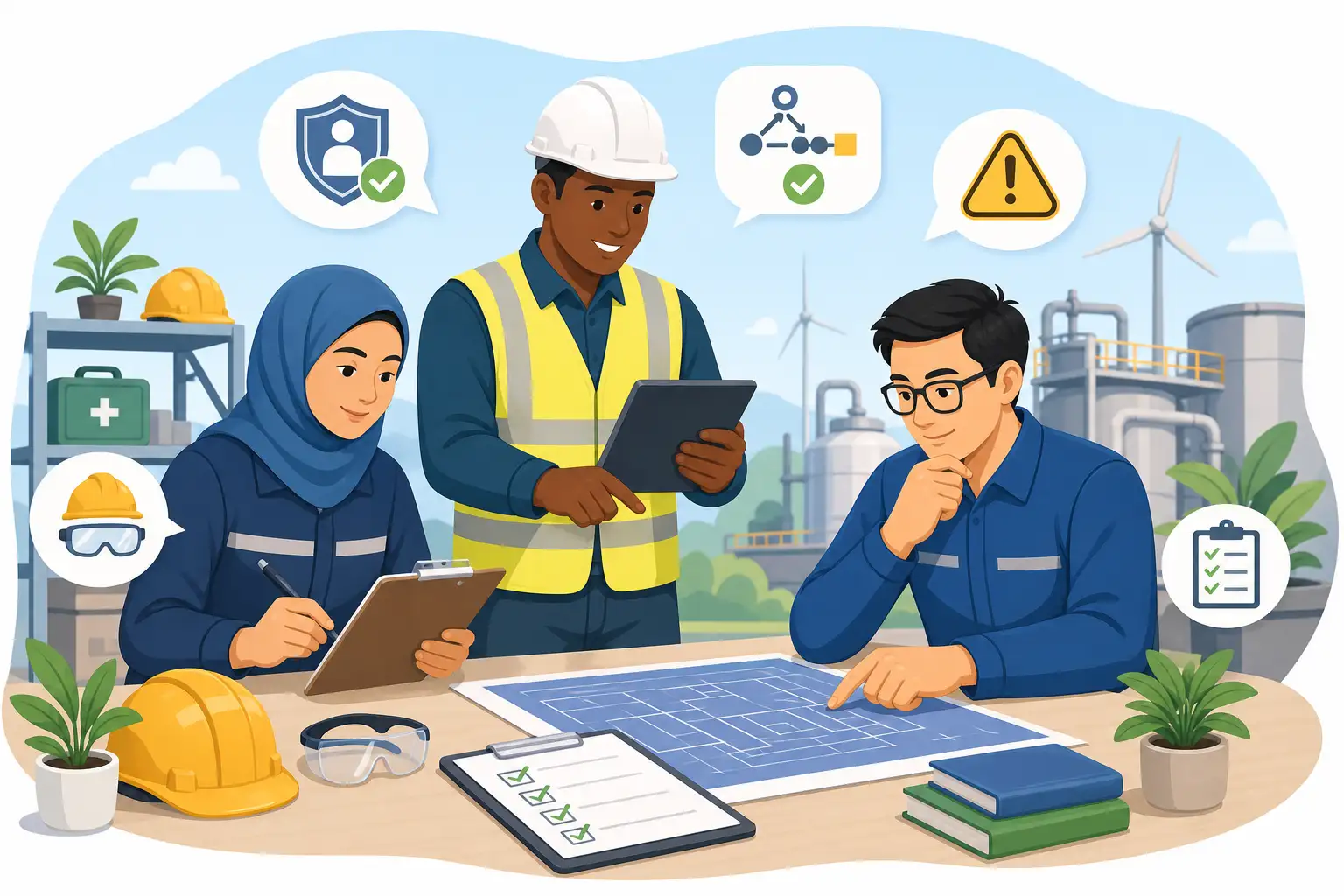
Prevents Catastrophic Energy Releases By Enforcing Lockout/tagout And Isolation Verification.
Controls High-risk Work By Using Permit-to-work And Confined Space Entry Systems.
Detects Developing Hazards Early Through Inspections Of Gas Detection, Interlocks, And Alarms.
Stops Repeat Incidents By Running Near-miss Reporting, Root-cause Analysis, And Corrective Action Closure.

Environmental Services & Waste Management
Government & Public Administration
Mining & Minerals
Oil & Gas (Petroleum & Natural Gas)
Construction & Civil Engineering
Utilities (Electric Power & Water)

Environmental Compliance Officer
Environmental Engineer
Recycling Operations Manager
Sustainability Manager
Waste Management Supervisor
HSE Officer
Risk Assessment Specialist
Safety & Compliance Officer
Permit-to-work Program Design, Authorization Workflows, And Job Hazard Analysis.
Lockout/tagout Methods, Isolation Planning, And Verification Testing Practices.
Inspection And Preventive Maintenance For Critical Protective Devices And Safety Instrumented Functions.
Incident Investigation Techniques (5-Whys, Fault Tree) And Corrective Action Tracking.
Management Of Change, Safety Documentation Control, And Audit Preparation.