
Pre-task Checks Catch Site-specific Hazards Before Crews Start Work.

Safety procedures are the step-by-step practices that keep people, equipment, and sites safe during routine and high-risk work. They matter because consistent execution reduces incidents, protects operations continuity, and ensures teams handle hazards the same way across shifts, contractors, and locations.
A professional with strong safety procedures can:

Conduct Pre-task Hazard Checks And Verify Required Controls Before Work Begins.
Select, Inspect, And Correctly Use PPE, Tools, And Safety Devices For The Task And Environment.
Execute Lockout/tagout, Confined Space Entry, Hot Work, And Lifting Steps According To Site Procedure.
Document Near Misses, Incidents, And Corrective Actions Using Approved Forms And Handover Logs.
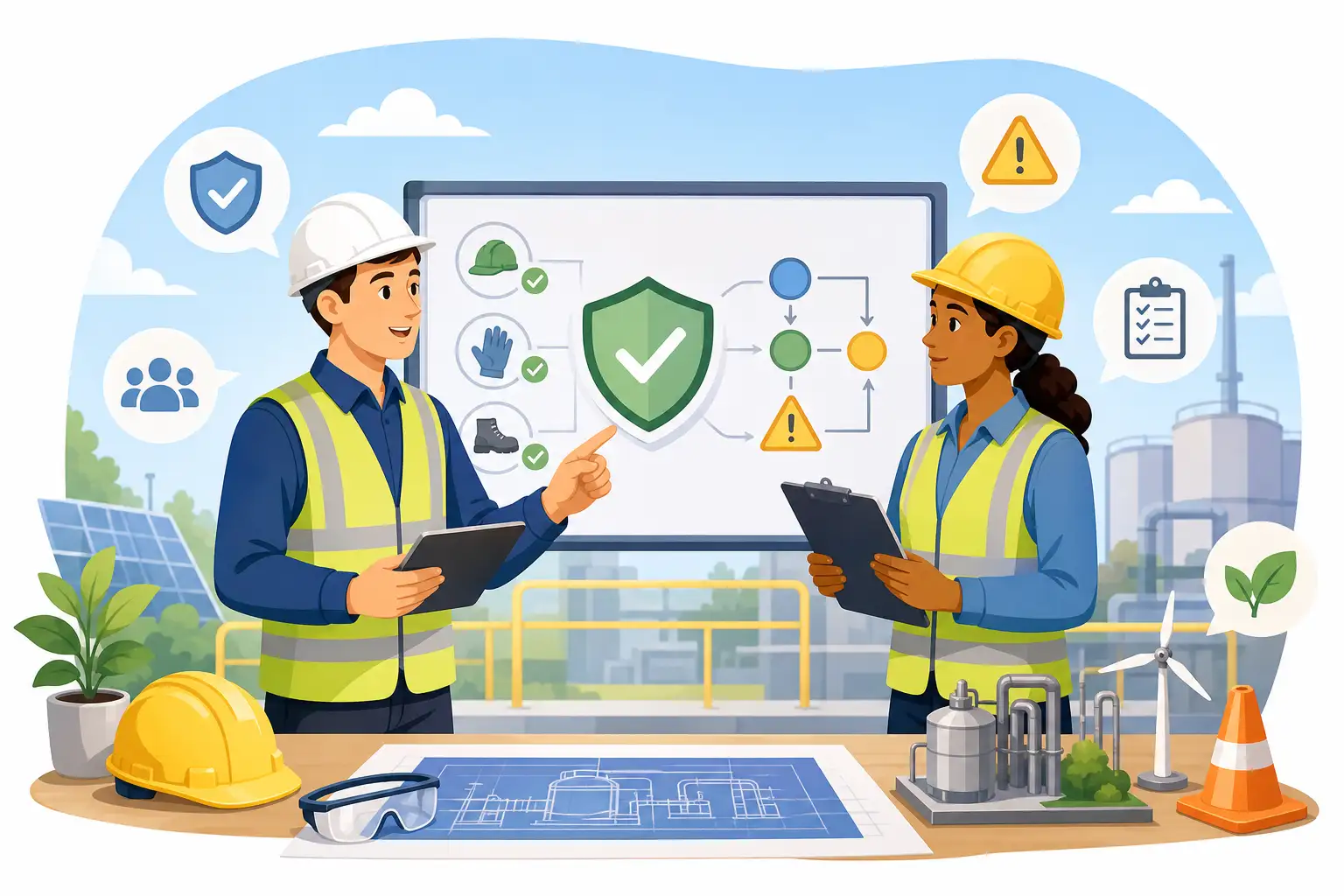
Pre-task Checks Catch Site-specific Hazards Before Crews Start Work.
Correct PPE Selection And Inspection Prevents Exposure, Burns, And Impact Injuries.
Lockout/tagout And Permit Steps Prevent Energization During Maintenance And Cleaning.
Near-miss And Incident Logging Enables Corrective Actions To Be Tracked Across Shifts And Contractors.

Environmental Services & Waste Management
Government & Public Administration
Mining & Minerals
Oil & Gas (Petroleum & Natural Gas)
Construction & Civil Engineering
Utilities (Electric Power & Water)

Environmental Compliance Officer
Environmental Engineer
Recycling Operations Manager
Sustainability Manager
Waste Management Supervisor
HSE Officer
Risk Assessment Specialist
Safety & Compliance Officer
Job Hazard Analysis And Control Verification.
PPE Selection, Fit Testing, And Inspection Routines.
Permit-to-work Execution For Confined Space, Hot Work, And Lifting.
Lockout/tagout Device Use And Energy Isolation Verification.
Incident, Near-miss, And Corrective-action Documentation Practices.