
Maintains Compliant Risk Registers, SWPs, And Permit-to-work Controls For High-risk Tasks.

Safety management systems are the structured processes and tools used to identify hazards, control risks, and ensure work complies with legal and organizational requirements. They matter because they standardize safe work practices, improve incident traceability, and support reliable reporting across high-risk operations.
A professional with strong safety management systems can:

Develop And Maintain Risk Registers, Safe Work Procedures, And Permit-to-work Controls Aligned To Site Activities.
Conduct Incident Investigations Using Root-cause Methods And Track Corrective Actions Through Closure With Documented Evidence.
Run Safety Audits And Inspections Against Regulatory And Internal Standards, Recording Findings And Assigning Accountable Owners.
Monitor Leading And Lagging Safety Indicators (e.g., Near Misses, Observations, TRIFR) And Produce Compliance-ready Reports For Stakeholders.
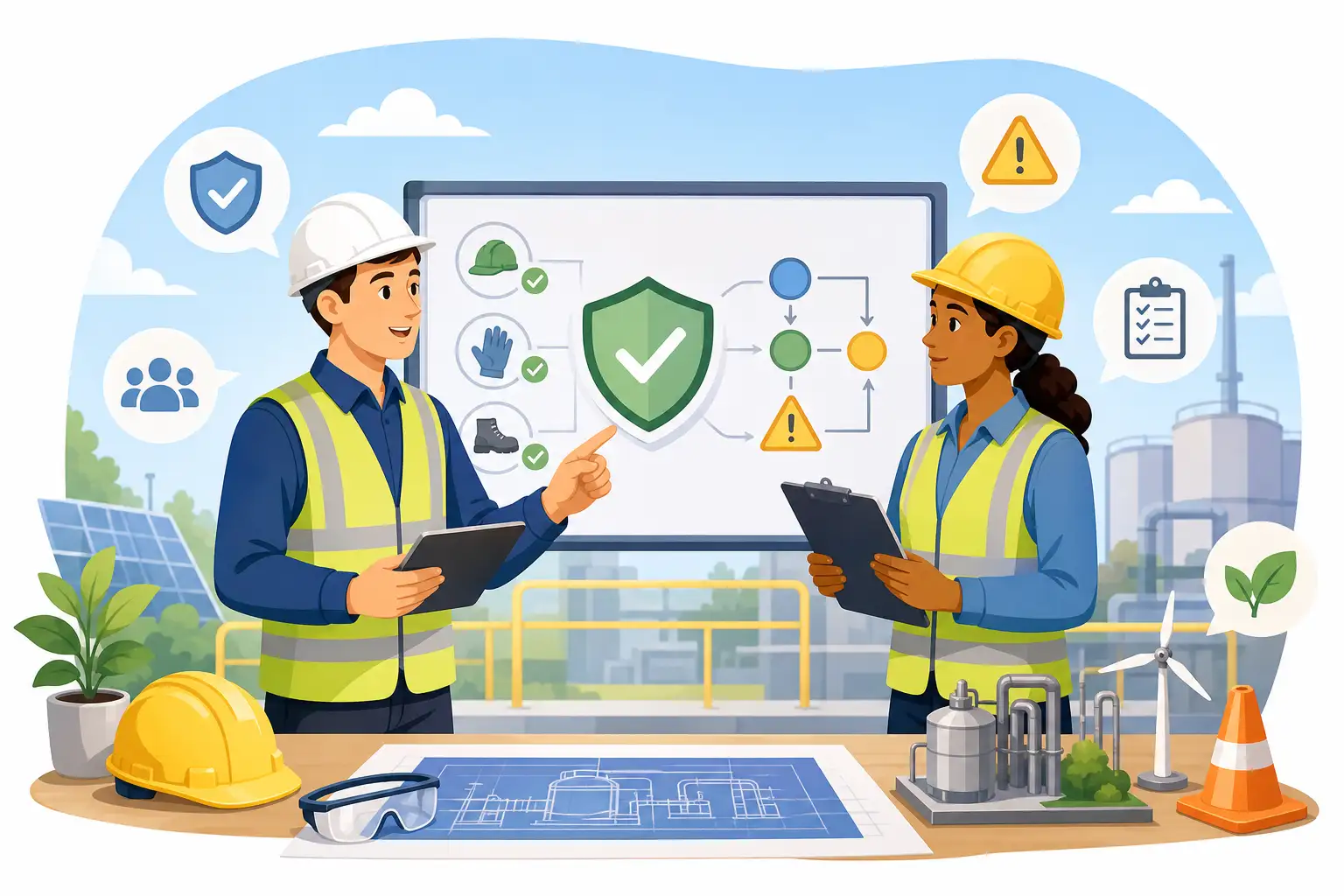
Maintains Compliant Risk Registers, SWPs, And Permit-to-work Controls For High-risk Tasks.
Enables Root-cause Incident Investigations With Tracked Corrective Actions To Verified Closure.
Produces Audit-ready Evidence From Inspections Against Regulatory And Internal Standards.
Tracks Near Misses, Observations, And TRIFR To Meet Client And Regulator Reporting Requirements.

Environmental Services & Waste Management
Government & Public Administration
Mining & Minerals
Oil & Gas (Petroleum & Natural Gas)
Construction & Civil Engineering
Utilities (Electric Power & Water)

Environmental Compliance Officer
Environmental Engineer
Recycling Operations Manager
Sustainability Manager
Waste Management Supervisor
HSE Officer
Risk Assessment Specialist
Safety & Compliance Officer
Hazard Identification Methods Such As JSA/JHA And HAZOP Facilitation.
Permit-to-work Administration For Isolation, Confined Space, And Hot Work.
Root-cause Analysis Techniques Such As 5 Whys And ICAM.
Safety Auditing And Inspection Planning Against ISO 45001 Or Site Standards.
Safety KPI Management Using Incident Systems And Corrective Action Registers.