
Cuts Fuel And Driver-hours Costs By Reducing Detours, Empty Miles, And Inefficient Stop Sequences.

Route planning is the design of efficient and reliable transport routes by balancing cost, time windows, capacity, and real-world constraints such as traffic, regulations, and service levels. It matters because optimized routing reduces fuel and labor spend while improving on-time delivery and operational resilience.
A professional with strong route planning can:

Create Daily And Weekly Routes That Respect Vehicle Capacity, Driver Hours, Delivery Windows, And Customer Priority Rules.
Use Mapping And Telematics Data To Account For Traffic Patterns, Tolls, Restrictions, And High-risk Segments.
Sequence Stops And Assign Loads To Minimize Empty Miles While Maintaining Temperature Control Or Handling Requirements.
Replan Routes In Response To Disruptions (breakdowns, Port Delays, Weather) And Communicate Updates To Drivers And Customers.
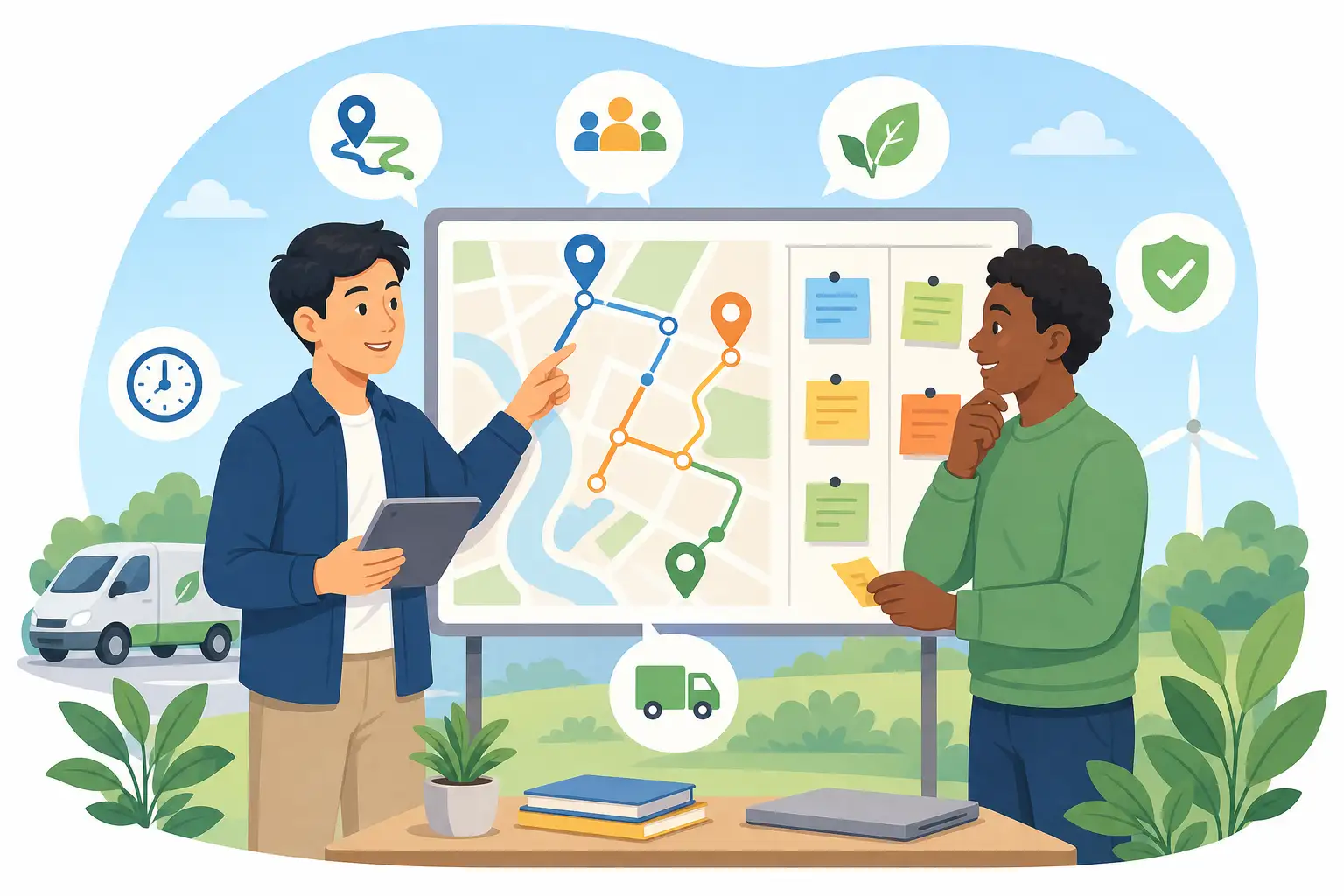
Cuts Fuel And Driver-hours Costs By Reducing Detours, Empty Miles, And Inefficient Stop Sequences.
Meets Customer Delivery Windows By Building Routes That Account For Service Times And Congestion Patterns.
Avoids Compliance Violations By Respecting Driver Hours-of-service Limits And Road Restrictions.
Maintains Product Quality For Temperature-sensitive Loads By Planning Dwell Time And Reefer-compatible Legs.

Logistics & Supply Chain Management
Transportation (Public Transit & Road)
Maritime & Shipping
Food & Beverage Manufacturing
Automotive Manufacturing
Consumer Packaged Goods (FMCG)

Logistics Manager
Supply Chain Planner
Procurement Specialist
Warehouse Operations Manager
Demand Planner
Fleet Manager
Port Operations Manager
Shipping Coordinator
Use Of Routing And Dispatch Software With Constraints-based Optimization.
Telematics And GPS Data Interpretation For Traffic, Dwell Time, And Route Adherence.
Load Planning And Stop Sequencing For Capacity, Weight, And Handling Constraints.
Regulatory Knowledge For Driver Hours, Toll Rules, Restricted Roads, And Permits.
Disruption Management Playbooks For Weather, Breakdowns, Port Delays, And Re-routing Communications.