
Identifies Hazards And Exposure Pathways That Could Injure Workers Or Impact Nearby Communities.

Risk assessment is systematically evaluating hazards and exposures to determine who or what could be harmed and how severe the consequences may be. It matters in safety, environmental, and compliance work because it guides controls, reduces incidents, and supports defensible regulatory decisions.
A professional with strong risk assessment can:

Identify Hazards And Exposure Pathways For People, Assets, And The Environment At A Site Or Operation.
Rate Risks Using A Defined Matrix Or Quantitative Method To Determine Severity, Likelihood, And Overall Level.
Specify Controls Such As Engineering Safeguards, Administrative Procedures, And PPE Requirements To Reduce Risk.
Produce Assessment Reports That Meet Regulatory Standards And Support Permitting, Audits, And Incident Prevention.
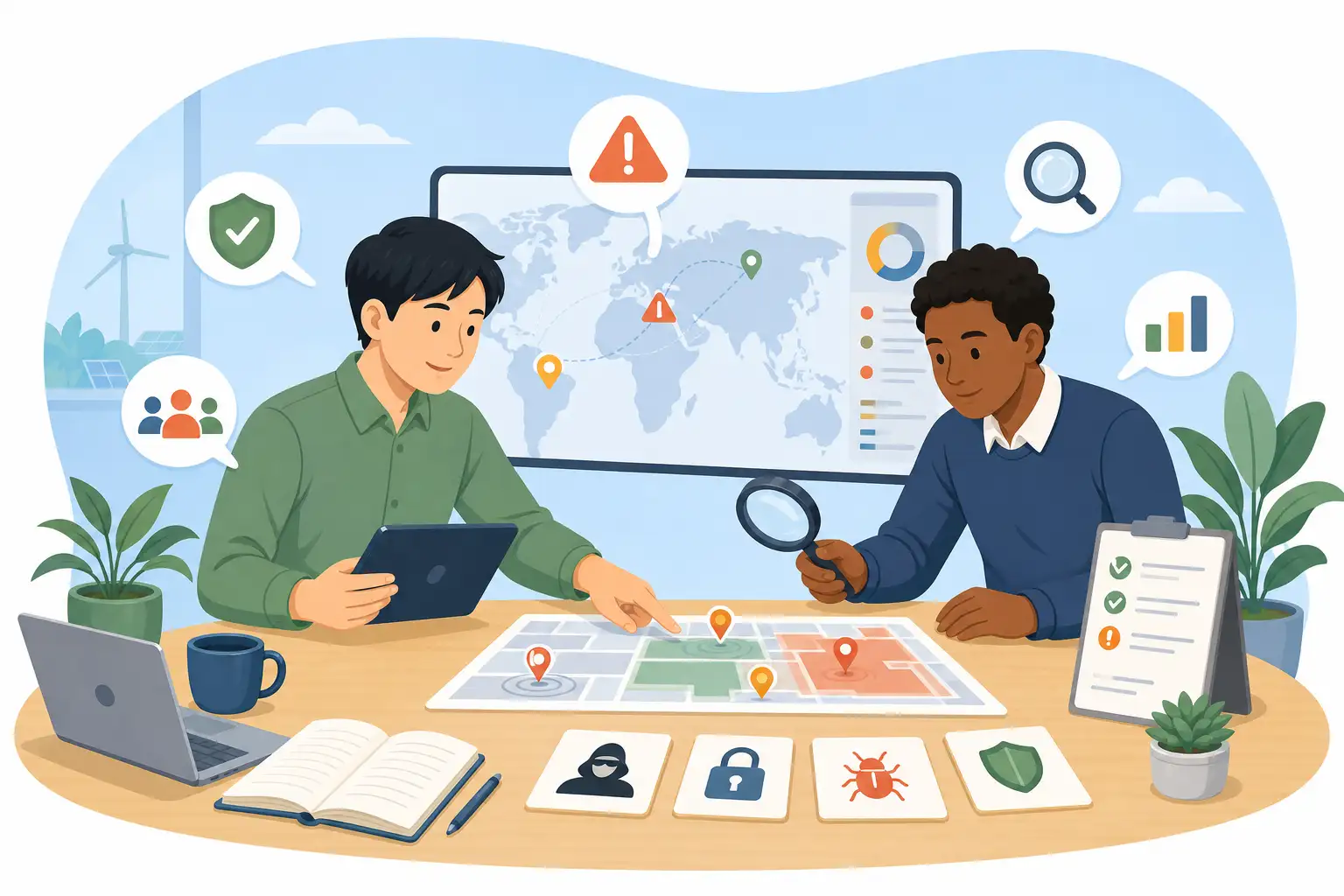
Identifies Hazards And Exposure Pathways That Could Injure Workers Or Impact Nearby Communities.
Assigns Consistent Severity And Likelihood Ratings That Drive Control Selection And Permitting Decisions.
Defines Engineering, Administrative, And PPE Controls Needed To Meet Safety And Environmental Standards.
Creates Audit-ready Documentation That Supports Compliance Inspections And Incident Investigations.

Environmental Services & Waste Management
Government & Public Administration
Mining & Minerals
Oil & Gas (Petroleum & Natural Gas)
Construction & Civil Engineering
Utilities (Electric Power & Water)

Environmental Compliance Officer
Environmental Engineer
Recycling Operations Manager
Sustainability Manager
Waste Management Supervisor
HSE Officer
Risk Assessment Specialist
Safety & Compliance Officer
Hazard Identification Methods (JHA/JSA, HAZOP, Site Inspections).
Risk Matrix Scoring And Quantitative Exposure Assessment.
Control Hierarchy Implementation (engineering, Administrative, PPE).
Regulatory Knowledge (OSHA, EPA, Local Permitting Requirements).
Assessment Reporting, Documentation, And Audit Preparation.