
Keeps Throughput On Target By Aligning Labor, Machines, And Materials To Takt Time.

Production management is planning and controlling people, equipment, materials, and methods to produce goods safely, on time, and to specification. It matters because effective control of throughput, quality, and cost reduces downtime, stabilizes operations, and supports compliance with manufacturing and safety standards.
A professional with strong production management can:

Set Production Targets And Allocate Labor, Machines, And Materials To Meet Demand And Takt Time.
Monitor Line Performance Using KPIs (OEE, Scrap, Cycle Time) And Intervene To Correct Deviations.
Implement Standardized Work, Safety Controls, And Quality Checkpoints Across Production Areas.
Resolve Constraints Such As Bottlenecks, Material Shortages, And Equipment Issues To Maintain Flow.
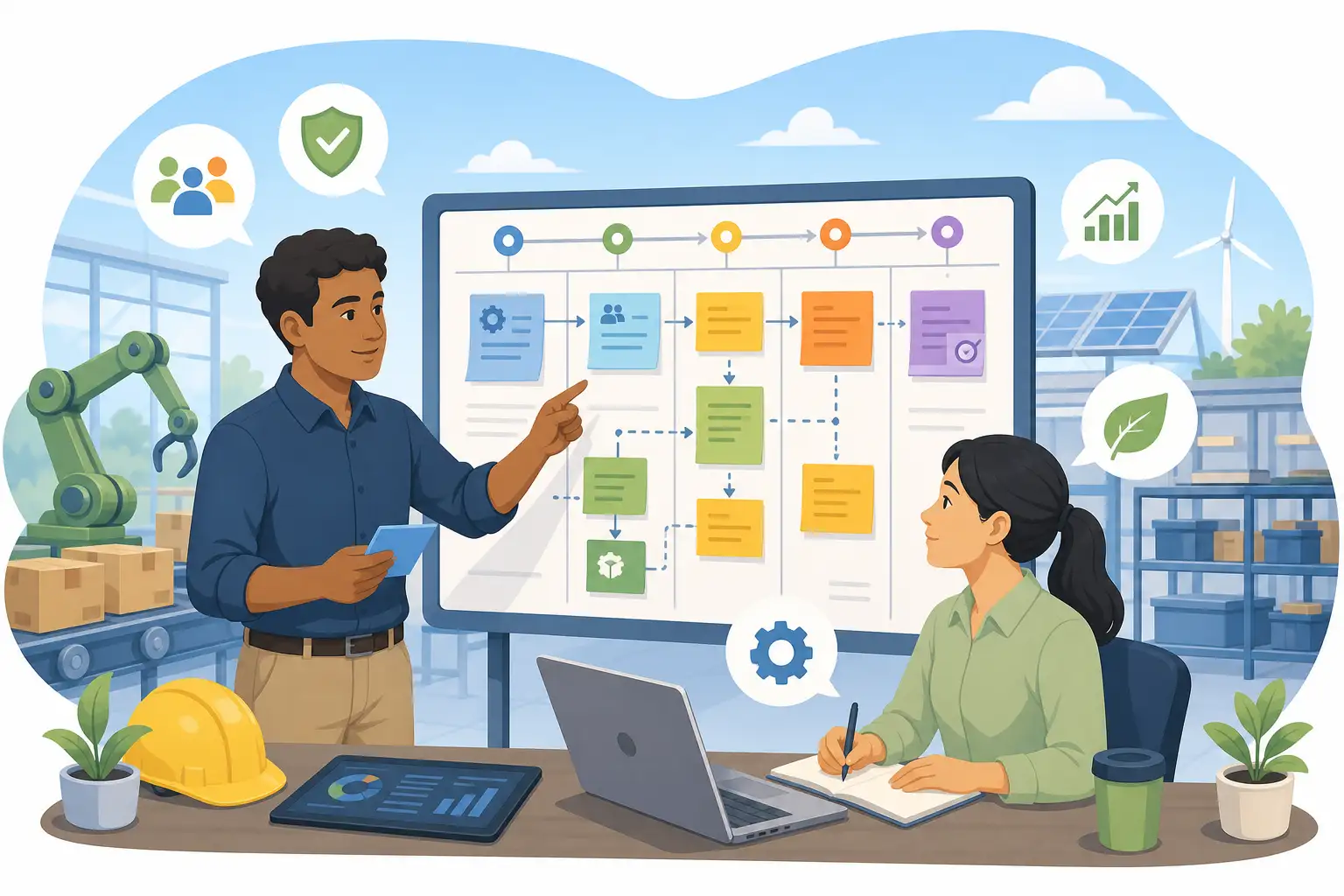
Keeps Throughput On Target By Aligning Labor, Machines, And Materials To Takt Time.
Limits Scrap And Rework By Enforcing In-process Quality Checkpoints On The Line.
Reduces Unplanned Downtime By Coordinating Maintenance Response And Escalation Paths.
Maintains Safe Operations By Embedding Standardized Work And Safety Controls Across Shifts.

Automotive Manufacturing
Electronics & Electrical Manufacturing
Machinery & Heavy Equipment Manufacturing
Utilities (Electric Power & Water)
Information Technology & Software
Scientific & Research Organizations

Manufacturing Engineer
Mechanical Design Engineer
Industrial Automation Engineer
Maintenance Engineer
Plant Manager
Quality Engineer
Electrical Engineer
Electronics Test Engineer
OEE, Scrap, Cycle-time, And Yield KPI Tracking With Tier Boards Or Dashboards.
Standardized Work Design, Line Balancing, And Work-instruction Control.
Safety Management Practices Such As LOTO, PPE Controls, And Hazard/risk Assessments.
Materials And Inventory Control Methods (kanban, Reorder Points, Staging).
Constraint And Bottleneck Management Using Lean Tools (5S, SMED, Problem Solving).