
Maintains Consistent Actuator Force And Cycle Times By Selecting Correct Valves, Cylinders, And Flow Controls.

Pneumatics is the ability to design, operate, and troubleshoot systems that use compressed air to power actuators, valves, and automation equipment. It matters because correctly specified circuits and maintained air supply improve machine reliability, cycle time consistency, and safety while reducing energy waste and unplanned downtime.
A professional with strong pneumatics can:

Design Pneumatic Circuits By Selecting Cylinders, Valves, Regulators, And Tubing To Meet Force, Speed, And Duty-cycle Requirements.
Set Up Air Preparation And Distribution (compressors, Dryers, FRLs) To Achieve Required Pressure, Flow, And Air Quality For Equipment.
Diagnose Faults Such As Leaks, Sticking Valves, Pressure Drops, And Actuator Misalignment Using Gauges, Flow Tests, And Schematic Tracing.
Optimize Performance By Tuning Regulators And Flow Controls, Implementing Safe Lockout/bleed Procedures, And Documenting Maintenance Intervals.
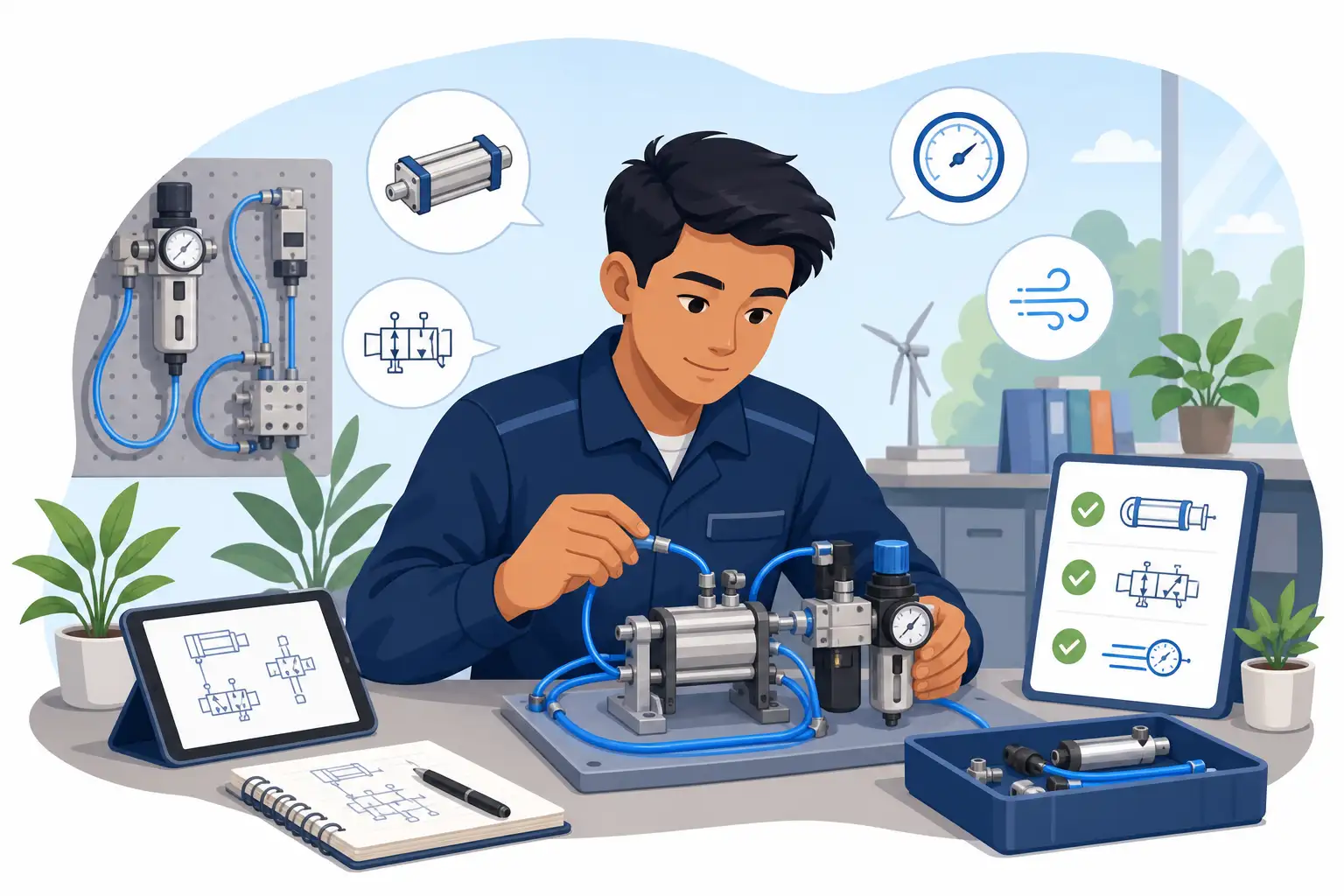
Maintains Consistent Actuator Force And Cycle Times By Selecting Correct Valves, Cylinders, And Flow Controls.
Prevents Machine Stoppages By Finding Leaks, Pressure Drops, And Sticking Valves Before They Halt Production.
Reduces Compressor Energy Costs By Controlling Air Losses, Pressure Setpoints, And Air Preparation Quality.
Avoids Injury And Equipment Damage By Using Proper Lockout, Bleed-down, And Safe Circuit Designs.

Automotive Manufacturing
Electronics & Electrical Manufacturing
Machinery & Heavy Equipment Manufacturing
Utilities (Electric Power & Water)
Information Technology & Software
Scientific & Research Organizations

Manufacturing Engineer
Mechanical Design Engineer
Industrial Automation Engineer
Maintenance Engineer
Plant Manager
Quality Engineer
Electrical Engineer
Electronics Test Engineer
Pneumatic Schematic Reading And Circuit Design For Directional, Pressure, And Flow Control.
Compressed Air Generation And Treatment (compressors, Dryers, FRLs, Filtration Standards).
Troubleshooting With Gauges, Flow Tests, Leak Detection, And Component Isolation Methods.
Component Selection And Sizing For Cylinders, Valves, Tubing, Fittings, And Sensors.
Preventive Maintenance Practices Including Regulator Tuning, Lubrication Policies, And Lockout/bleed Procedures.