
Delivers Consistent Fit Across Sizes By Controlling Balance, Ease, And Grading Rules.

Pattern making is the conversion of garment designs into precise templates that define fit, shape, and construction details for sampling and production. It matters because accurate patterns reduce material waste and rework while ensuring consistent sizing, comfort, and manufacturability across product lines.
A professional with strong pattern making can:

Draft And Adjust Blocks And Style Patterns From Design Specifications, Measurements, And Fabric Behavior.
Add Seam Allowances, Notches, Grainlines, And Construction Markings To Support Accurate Cutting And Assembly.
Grade Patterns Across Size Ranges While Maintaining Fit Balance, Proportions, And Movement Ease.
Create And Validate Sample Muslins Or Prototypes, Then Update Patterns Based On Fit Sessions And Production Constraints.
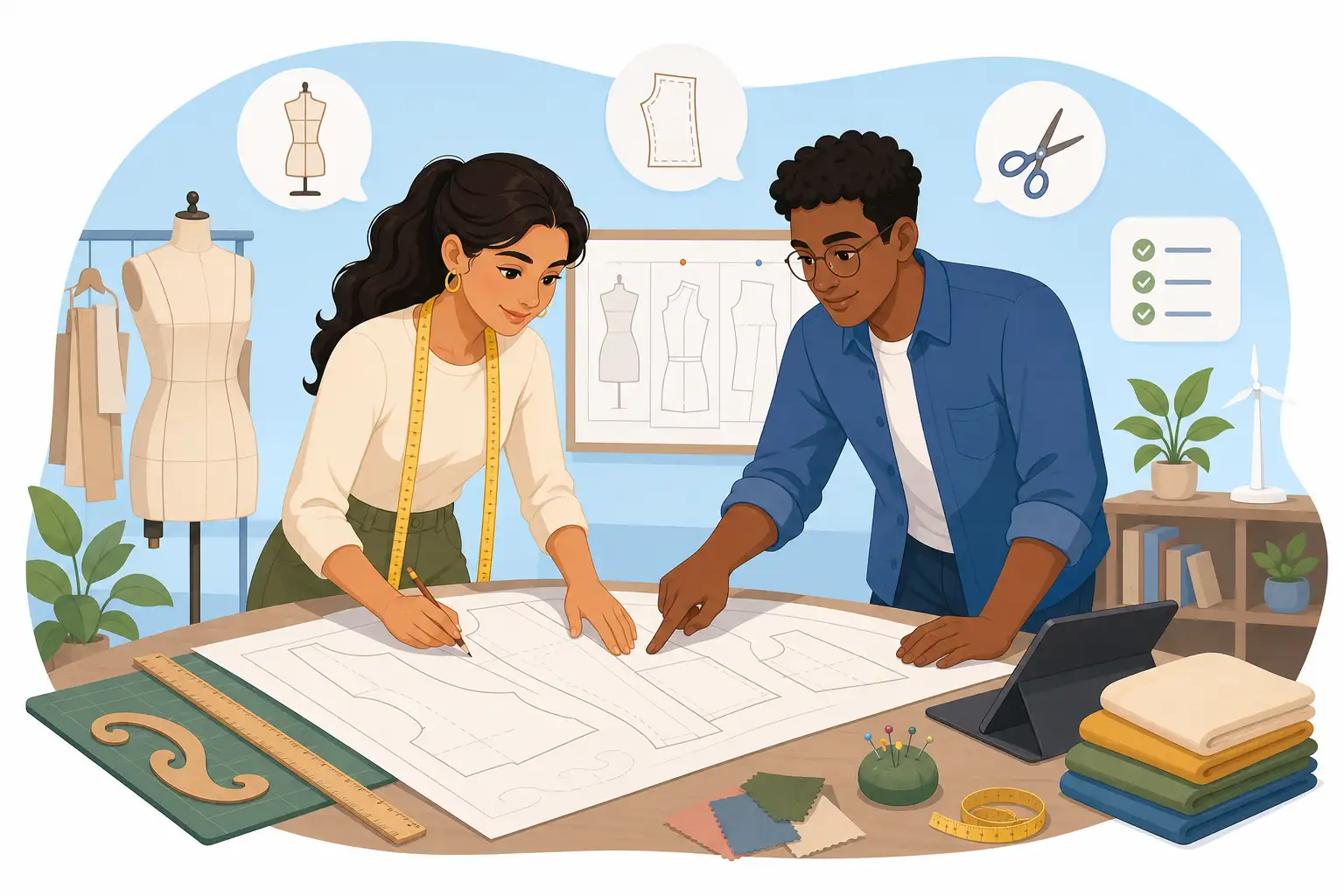
Delivers Consistent Fit Across Sizes By Controlling Balance, Ease, And Grading Rules.
Cuts Fabric Waste By Optimizing Pattern Shapes, Seam Allowances, And Marker-ready Pieces.
Prevents Sewing-line Rework By Adding Accurate Notches, Drill Holes, And Construction Marks.
Speeds Sampling Cycles By Translating Fit-session Feedback Into Precise Pattern Updates.

Fashion & Luxury Goods
Textile & Apparel Manufacturing
Consumer Packaged Goods (FMCG)
Advertising & Marketing
Logistics & Supply Chain Management
Cosmetics & Personal Care

Fashion Designer
Merchandiser
Apparel Production Manager
Pattern Designer
Textile Engineer
Retail Operations Manager
Brand Manager
Quality Control
Flat Pattern Drafting And Draping Techniques For Blocks And Style Development.
Grading Methods And Size Specification Management Across A Range.
Fabric Behavior Knowledge, Including Stretch, Shrinkage, And Grainline Effects.
CAD Pattern Software Use Such As Gerber AccuMark, Lectra, Or Optitex.
Sample Fitting, Measurement Verification, And Tech Pack Interpretation.