
Improves Throughput By Identifying Bottlenecks And Constraints Across End-to-end Process Handoffs.

Operations management is planning and running the processes that deliver services or products, balancing capacity, cost, quality, and time. It matters because well-managed operations improve reliability and customer outcomes while reducing waste, bottlenecks, and rework across teams and suppliers.
A professional with strong operations management can:

Map End-to-end Processes To Identify Constraints, Handoffs, And Failure Points Affecting Throughput And Quality.
Build Capacity And Staffing Plans Using Demand Forecasts, Cycle Times, And Service-level Targets.
Define Operational KPIs And Routines (daily Management, Escalations) To Maintain Performance And Address Deviations Quickly.
Standardize Work Through SOPs And Continuous-improvement Actions That Reduce Variation And Prevent Recurring Defects.
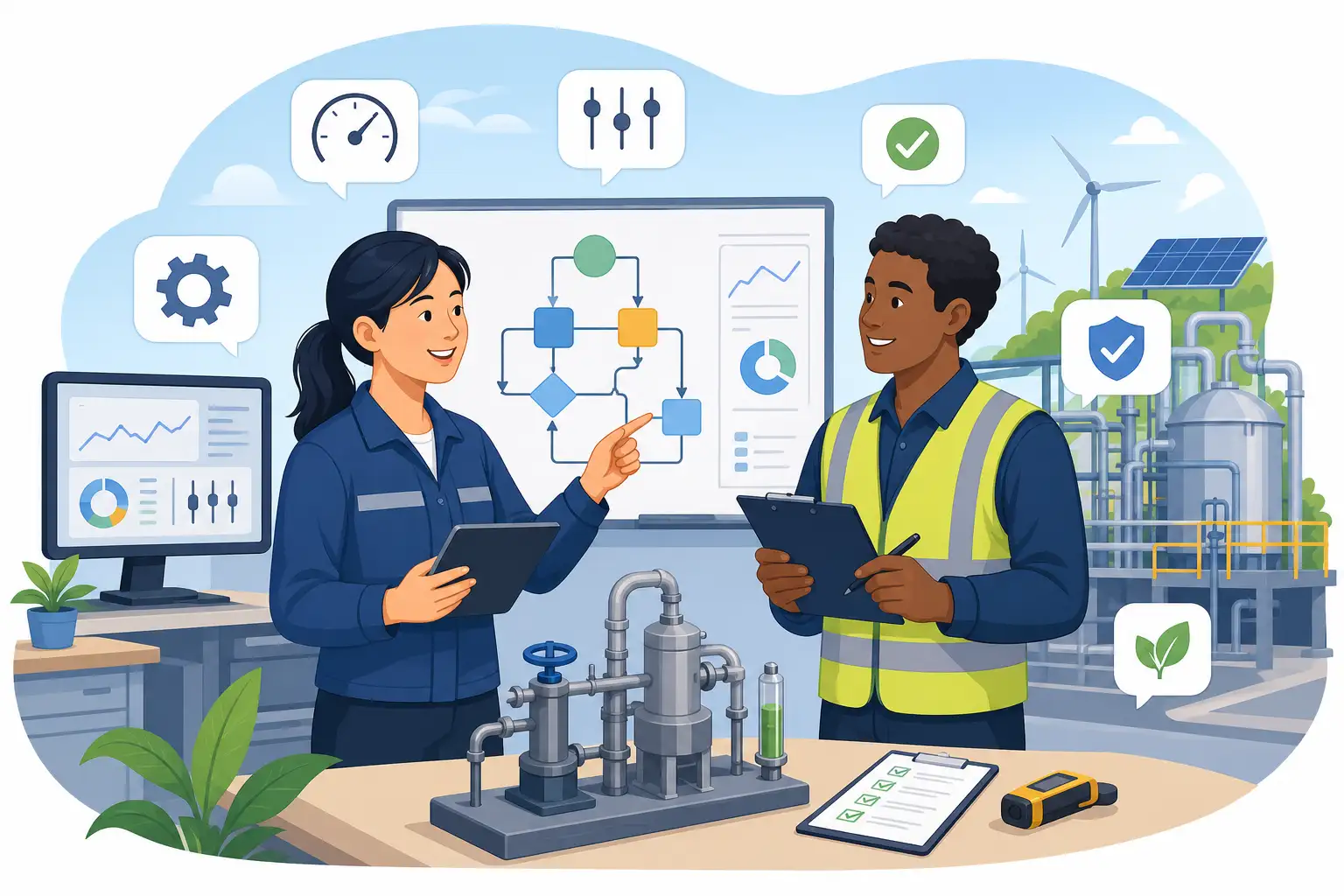
Improves Throughput By Identifying Bottlenecks And Constraints Across End-to-end Process Handoffs.
Stabilizes Service Levels By Matching Staffing And Capacity To Demand Forecasts And Cycle Times.
Prevents Recurring Defects By Standardizing Work With SOPs And Clear Escalation Triggers.
Cuts Delays And Rework By Running Daily Management Routines Tied To Operational KPIs And Deviation Response.

Consulting & Professional Services
Education & Training
Government & Public Administration
Scientific & Research Organizations
Information Technology & Software
Logistics & Supply Chain Management

Business Analyst
Management Consultant
Corporate Trainer
Program Manager
Operations Manager
Process Improvement Specialist
Research Scientist
Public Administrator
Process Mapping Techniques Such As SIPOC, Value Stream Maps, And Swimlanes.
Capacity Planning And Scheduling Using Demand, Takt/cycle Time, And Utilization.
KPI Design For Throughput, WIP, Lead Time, Quality, And Service Levels.
Standard Work And SOP Development With Visual Controls And Checklists.
Lean And Constraint Management Practices Such As 5S, Kaizen, And Bottleneck Analysis.