
Translate Drawings, GD&T, And BOMs Into Build Steps That Meet Fit, Form, And Function Requirements.

Machinery and heavy equipment manufacturing fundamentals involve understanding how complex mechanical and electrical systems are designed, fabricated, assembled, and tested at scale. This knowledge matters because it supports safer production, higher quality, and faster troubleshooting across engineering, maintenance, and plant operations.
A professional with strong machinery & heavy equipment manufacturing fundamentals can:

Read And Interpret Engineering Drawings, Tolerances, And Bills Of Materials To Support Build And Inspection Requirements.
Explain Core Manufacturing Processes—machining, Welding, Casting, Assembly, And Finishing—and Their Typical Failure Modes.
Use Basic Reliability And Maintenance Concepts (MTBF, Preventive Maintenance, Root-cause Thinking) To Reduce Downtime.
Apply Quality Principles Such As Process Capability, Inspection Plans, And Nonconformance Handling To Prevent Defects And Rework.
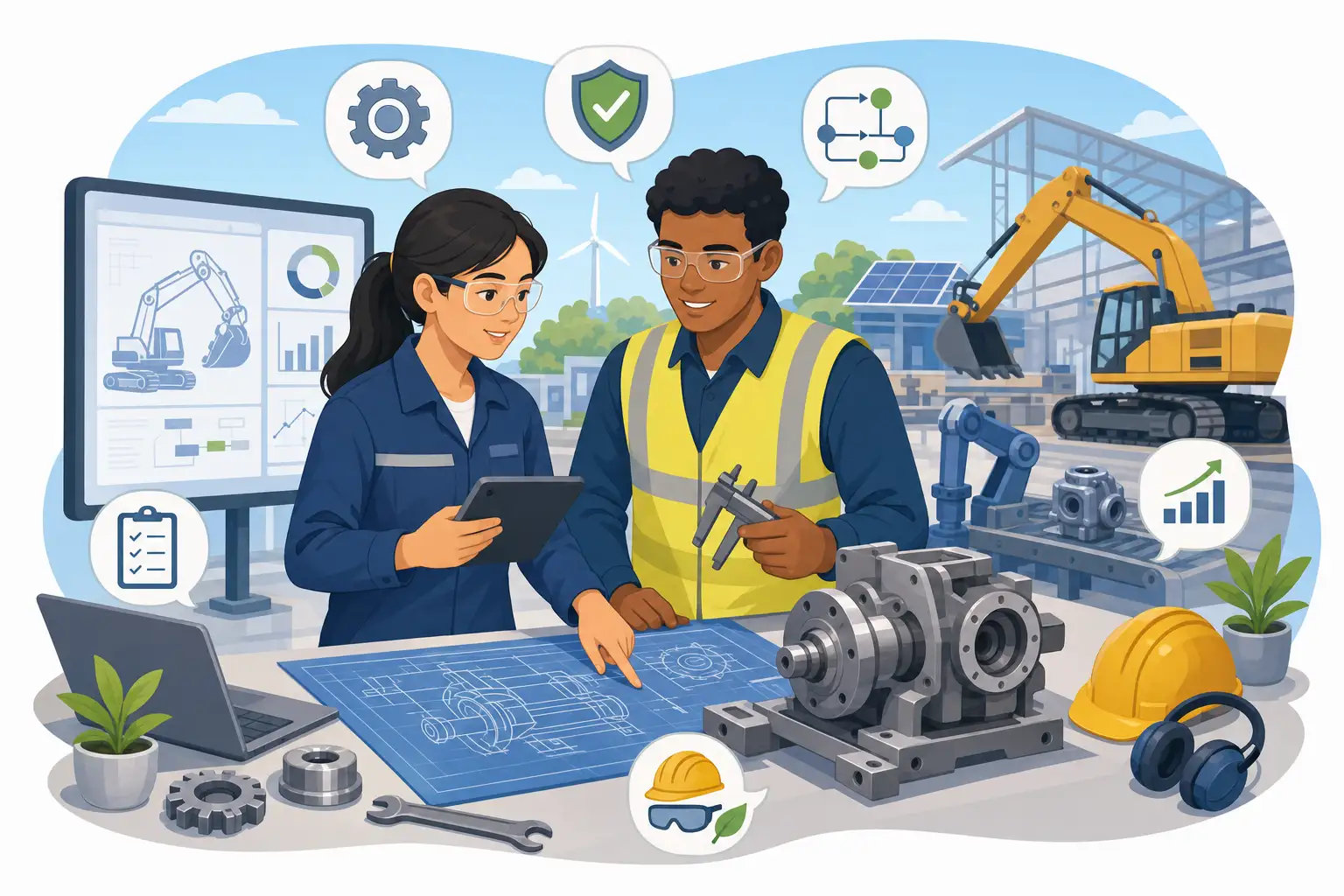
Translate Drawings, GD&T, And BOMs Into Build Steps That Meet Fit, Form, And Function Requirements.
Select Machining, Welding, Casting, And Assembly Methods That Prevent Common Defects And Rework.
Apply Preventive Maintenance And Reliability Metrics To Reduce Unplanned Downtime On Critical Assets.
Execute Inspection Plans And Nonconformance Handling To Keep Defects From Escaping To Customers.

Automotive Manufacturing
Electronics & Electrical Manufacturing
Machinery & Heavy Equipment Manufacturing
Utilities (Electric Power & Water)
Information Technology & Software
Scientific & Research Organizations

Manufacturing Engineer
Mechanical Design Engineer
Industrial Automation Engineer
Maintenance Engineer
Plant Manager
Quality Engineer
Electrical Engineer
Electronics Test Engineer
Engineering Drawing Interpretation, Including GD&T And Tolerance Stack-up.
Manufacturing Process Knowledge For Machining, Welding, Casting, Heat Treat, And Finishing.
Quality Tools Such As SPC, Process Capability, FMEA, And Control Plans.
Maintenance And Troubleshooting Skills, Including Root-cause Analysis And PM Scheduling.
Test And Inspection Methods, Including Metrology Tools, Torque/fit Checks, And Functional Testing.