
Delivers Consistent Exposure And Contrast So Footage Matches Across Angles, Takes, And Locations.

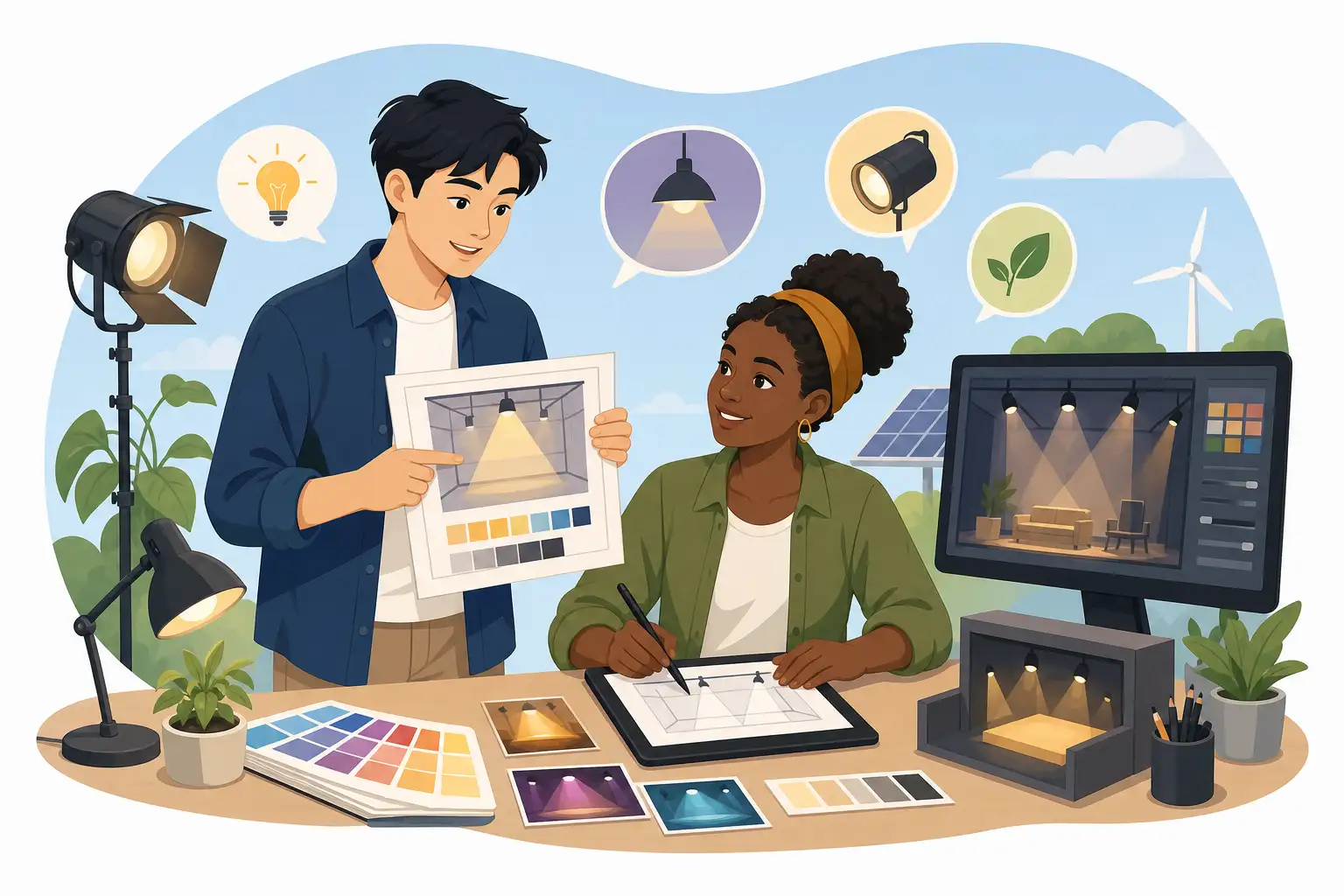
Lighting design is planning and shaping light to control exposure, mood, and visual clarity across sets, studios, or locations using fixtures, modifiers, and color control. It matters because it improves image quality, supports storytelling, and reduces reshoots by making scenes consistent and technically reliable.
A professional with strong lighting design can:

Create A Lighting Plan That Specifies Fixture Types, Placement, Power Needs, And Control Methods To Achieve The Intended Look.
Set And Balance Key, Fill, And Back Lights To Manage Contrast Ratios And Maintain Consistent Skin Tones Across Shots.
Match Color Temperature And Tint Using Gels Or LED Settings To Keep Continuity Between Cameras And Locations.
Evaluate And Mitigate Practical Issues Such As Flicker, Glare, Spill, And Shadows To Protect Safe, Usable Footage.
Delivers Consistent Exposure And Contrast So Footage Matches Across Angles, Takes, And Locations.
Controls Color Temperature And Tint To Maintain Accurate Skin Tones And Continuity Between Cameras.
Prevents Flicker, Glare, And Unwanted Spill That Can Make Shots Unusable Or Require Reshoots.
Meets Power, Rigging, And Safety Constraints So Sets Stay On Schedule And Within Electrical Limits.

Media & Journalism
Film, Television & Video Production
Entertainment & Performing Arts
Advertising & Marketing
Information Technology & Software
Education & Training

Content Producer
Editor
Journalist
News Director
Photojournalist
Cinematographer
Director
Video Editor
Photometric Planning And Contrast Ratio Control For Key, Fill, And Back Light.
Fixture Selection And Rigging Knowledge For LEDs, HMIs, Tungsten, And Practicals.
Color Management With Gels, LED Settings, And White-balance Workflows.
Lighting Control Systems, Including DMX, Dimming, And Wireless Triggers.
Light Shaping With Modifiers Such As Diffusion, Grids, Flags, Cutters, And Bounce.