
Reduces Fraud Exposure By Enforcing Segregation Of Duties, Approvals, And Reconciliations In Key Workflows.

Internal controls are the policies, procedures, and technical safeguards that ensure work is performed accurately, securely, and in line with laws and standards. They matter because they reduce fraud and errors, improve audit readiness, and create consistent, repeatable operations across teams and systems.
A professional with strong internal controls can:

Map Key Risks In A Process And Implement Control Points Such As Approvals, Reconciliations, And Segregation Of Duties.
Design Access Controls And Change-management Steps To Protect Data Integrity In Core Systems.
Perform Periodic Control Testing, Capture Evidence, And Address Gaps With Corrective Actions And Owners.
Create Clear Control Documentation, Including Process Flows And Control Matrices, To Support Audits And Compliance Reviews.
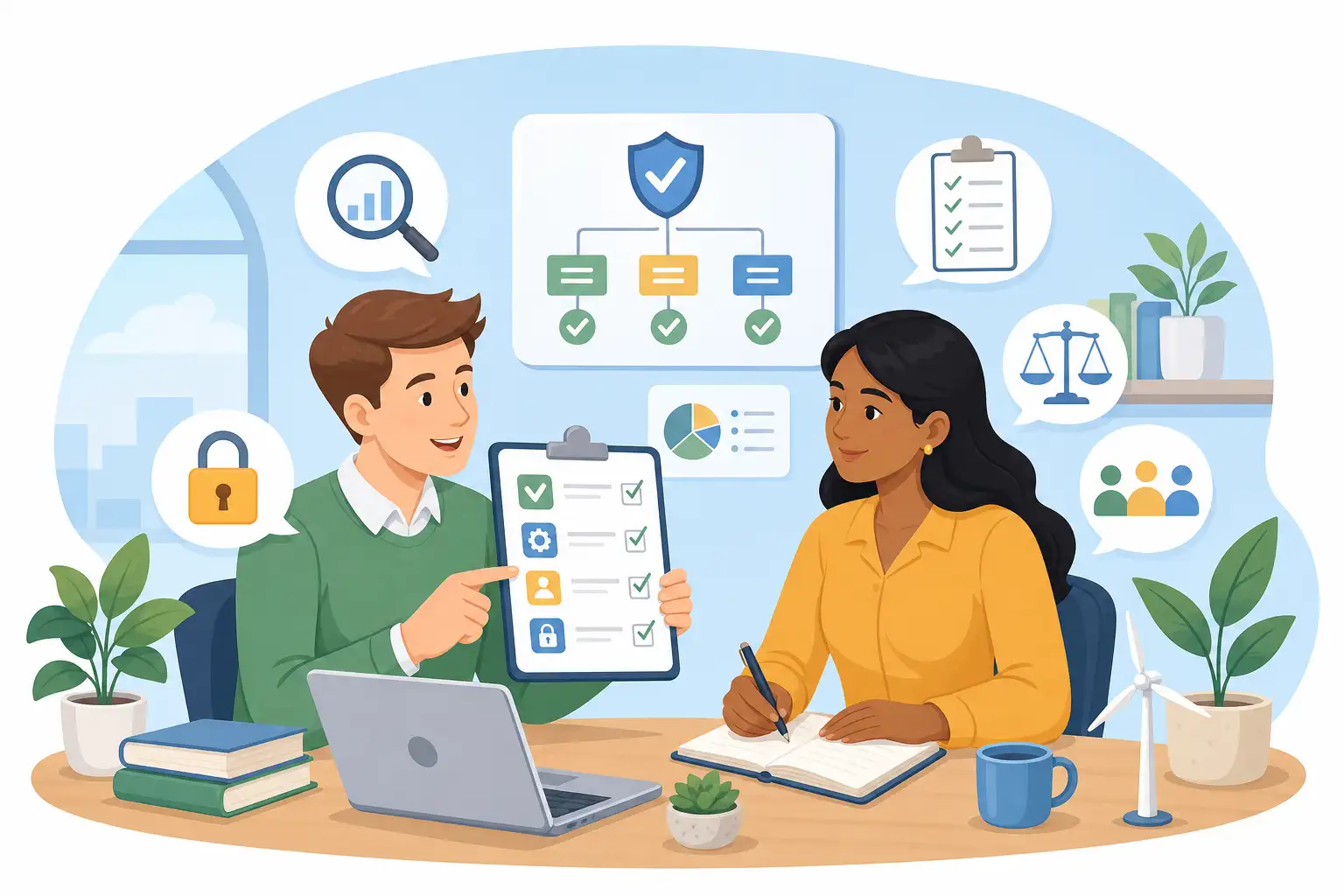
Reduces Fraud Exposure By Enforcing Segregation Of Duties, Approvals, And Reconciliations In Key Workflows.
Protects Financial And Operational Data By Tightening Access Controls And Change Management In Core Systems.
Speeds Audits And Inspections By Keeping Control Evidence, Matrices, And Process Flows Ready For Review.
Stops Recurring Control Failures By Testing Controls, Assigning Owners, And Tracking Corrective Actions To Closure.

Consulting & Professional Services
Scientific & Research Organizations
Information Technology & Software
Construction & Civil Engineering
Food & Beverage Manufacturing
Government & Public Administration

Process Engineer
Quality Assurance Specialist
Operations Manager
Business Analyst
Research Scientist
Program Manager
Compliance Officer
Product Manager
Risk And Control Mapping Using Process Walkthroughs And Control Matrices.
Access Control Administration And Periodic User Access Reviews.
Reconciliation Design And Exception Handling For High-volume Transactions.
Control Testing Methods, Evidence Collection, And Remediation Tracking.
Audit-ready Documentation Practices, Including Narratives, Flowcharts, And Change Logs.