
Prevents Exposures By Verifying SDS, Labels, And Chemical Compatibility Before Storage And Use.

Hazardous material handling involves safely receiving, storing, transferring, using, and disposing of chemicals and other regulated substances. It matters because correct labeling, containment, and PPE practices prevent exposure, spills, fires, and environmental releases while keeping operations compliant.
A professional with strong hazardous material handling can:

Verify Labels, SDS, Compatibility, And Quantity Limits When Receiving And Storing Hazardous Materials.
Select And Enforce Appropriate PPE, Engineering Controls, And Ventilation For Handling, Mixing, And Transfer Tasks.
Implement Spill Prevention And Response Steps, Including Containment, Cleanup, And Incident Reporting Requirements.
Manage Hazardous Waste Segregation, Packaging, Manifests, And Handover To Licensed Disposal Or Treatment Providers.
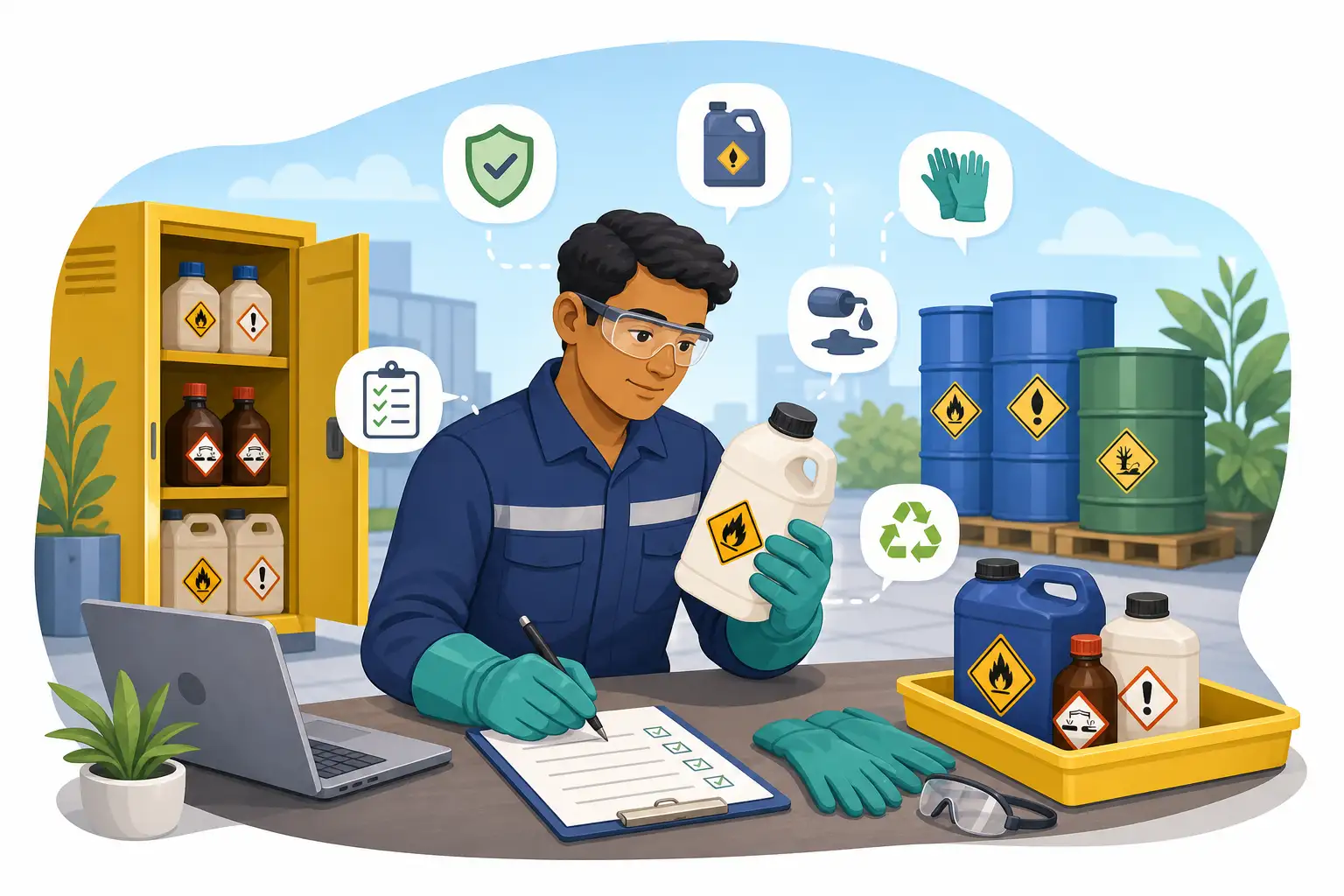
Prevents Exposures By Verifying SDS, Labels, And Chemical Compatibility Before Storage And Use.
Reduces Spill, Fire, And Reaction Risk By Enforcing Containment, Ventilation, And Safe Transfer Practices.
Enables Rapid, Compliant Response By Following Spill Control, Cleanup, And Reporting Steps.
Avoids Violations And Environmental Releases Through Correct Waste Segregation, Packaging, And Manifesting.

Environmental Services & Waste Management
Government & Public Administration
Mining & Minerals
Oil & Gas (Petroleum & Natural Gas)
Construction & Civil Engineering
Utilities (Electric Power & Water)

Environmental Compliance Officer
Environmental Engineer
Recycling Operations Manager
Sustainability Manager
Waste Management Supervisor
HSE Officer
Risk Assessment Specialist
Safety & Compliance Officer
Safety Data Sheet (SDS) Review And GHS Labeling Comprehension.
Chemical Compatibility And Segregation Rules For Storage Cabinets, Bunding, And Quantity Limits.
PPE Selection And Fit Checks For Chemical Handling Tasks.
Spill Prevention And Response Procedures, Including Use Of Spill Kits And Containment Methods.
Hazardous Waste Management Practices, Including Container Labeling, Accumulation Rules, And Manifests.