
Surfaces Task-specific Hazards During JSA/JHA So Controls Are Set Before Work Starts.

Hazard identification is the practical ability to spot sources of harm in processes, equipment, environments, and behaviors before work begins. It matters because early detection enables effective controls, supports safe work planning, and reduces incidents, downtime, and regulatory breaches.
A professional with strong hazard identification can:

Perform Task-based Hazard Assessments (e.g., JSA/JHA) And Capture Hazards For Routine And Non-routine Activities.
Identify Chemical, Physical, Ergonomic, And Environmental Hazards Through Walkthroughs, Observations, And Worker Input.
Classify Hazards By Potential Consequence And Exposure Likelihood To Prioritize Controls And Escalation.
Document Hazards And Required Controls In Risk Registers, Permits To Work, And Pre-start Briefings.
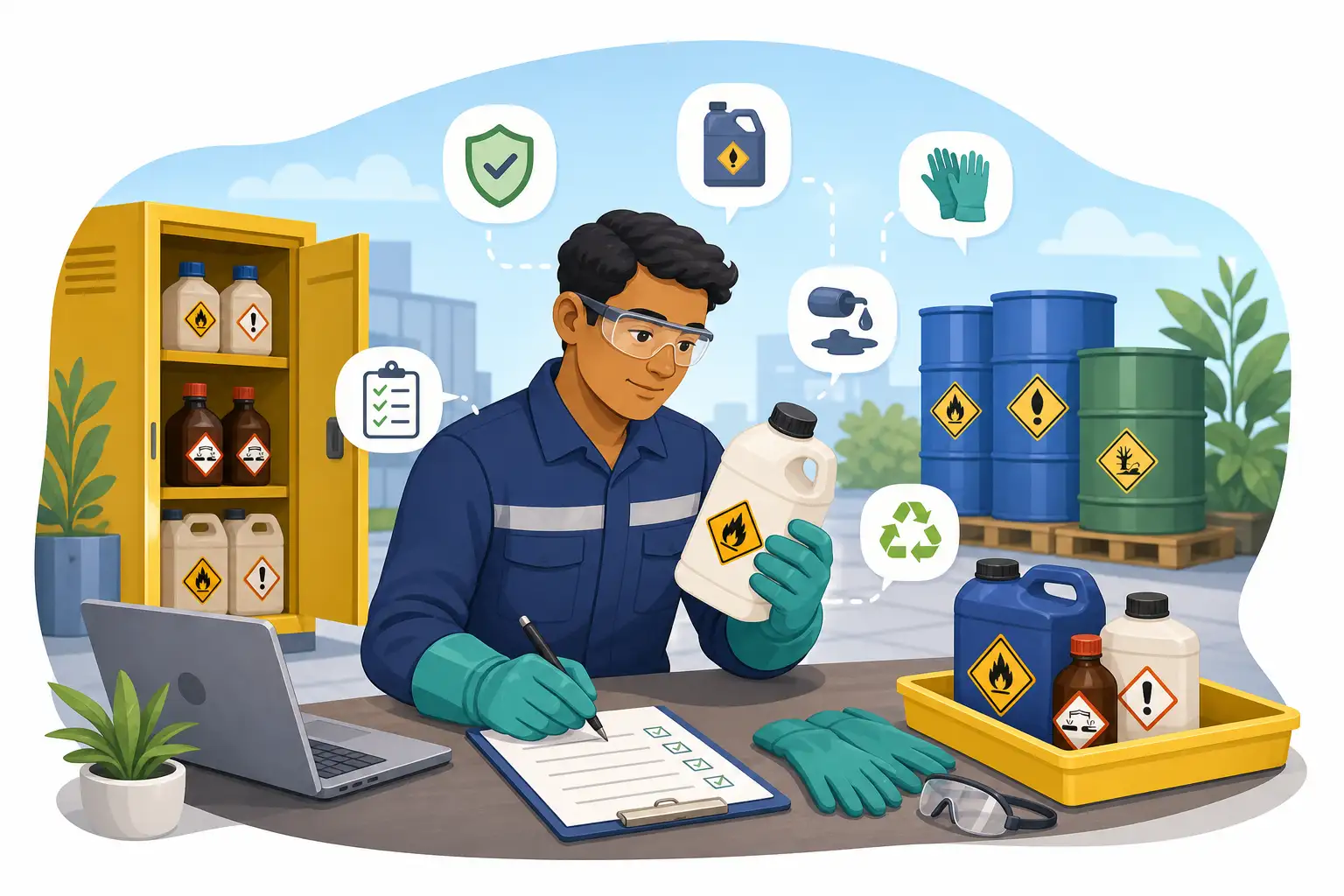
Surfaces Task-specific Hazards During JSA/JHA So Controls Are Set Before Work Starts.
Detects Chemical, Physical, Ergonomic, And Environmental Hazards During Walkthroughs And Observations.
Prioritizes Which Hazards Need Immediate Controls By Rating Consequence And Exposure Likelihood.
Feeds Permits To Work And Pre-start Briefings With Clear Hazard Lists And Required Safeguards.

Environmental Services & Waste Management
Government & Public Administration
Mining & Minerals
Oil & Gas (Petroleum & Natural Gas)
Construction & Civil Engineering
Utilities (Electric Power & Water)

Environmental Compliance Officer
Environmental Engineer
Recycling Operations Manager
Sustainability Manager
Waste Management Supervisor
HSE Officer
Risk Assessment Specialist
Safety & Compliance Officer
Job Safety Analysis (JSA/JHA) Methods For Routine And Non-routine Tasks.
Worksite Inspection And Observation Techniques, Including Worker Interviews And Feedback Capture.
Hazard Classification Frameworks (e.g., Energy Sources, Hierarchy Of Controls) For Consistent Identification.
Risk Ranking And Escalation Criteria Based On Severity And Likelihood.
Risk Register And Permit-to-work Documentation Practices For Recording Hazards And Controls.