
Build Defensible 3D Geology That Guides Drill Targeting, Pit Limits, And Geotechnical Assumptions.

Geological modeling software such as Leapfrog builds 3D subsurface models from drillholes, assays, structures, and geophysical data. It matters in mining and environmental work because better models improve resource interpretation, guide drilling and pit design, and provide traceable assumptions for technical and regulatory decisions.
A professional with strong geological modeling software (leapfrog) can:

Import, Validate, And Manage Drillhole, Assay, And Survey Datasets With Consistent Codes, Units, And QA/QC Rules.
Construct And Update 3D Geological Surfaces And Domains Using Implicit Modeling Workflows And Structural Constraints.
Generate Sections, Plans, And Volumetric Outputs To Support Resource Estimation, Mine Planning, And Reporting.
Document Model Versions, Inputs, And Assumptions, And Package Deliverables For Peer Review And Stakeholder Sign-off.
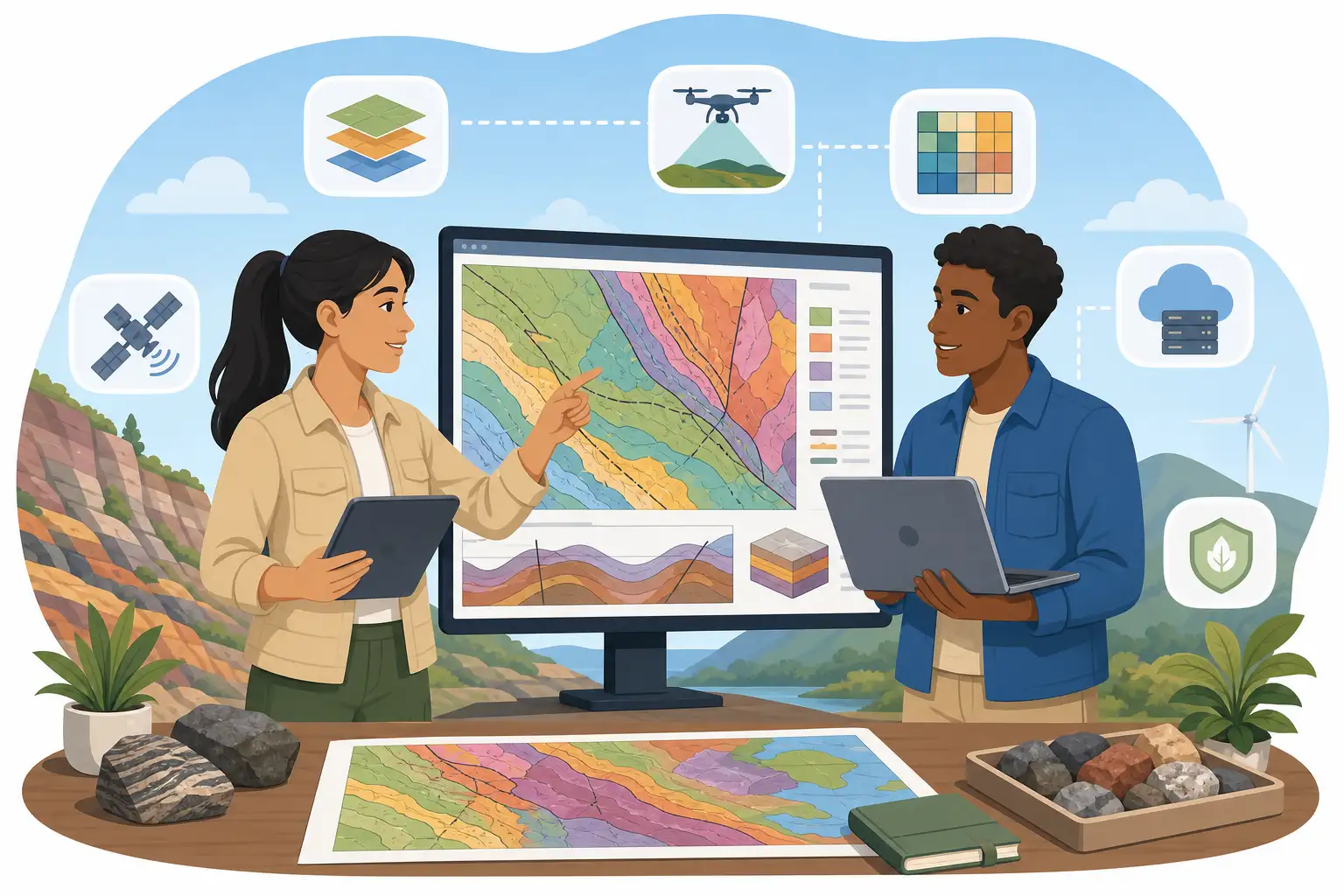
Build Defensible 3D Geology That Guides Drill Targeting, Pit Limits, And Geotechnical Assumptions.
Convert Drillhole And Assay Data Into Domains And Volumes Used For Resource And Grade Interpretation.
Provide Traceable Model Versions And Assumptions For Technical Reviews And Regulatory Reporting.
Generate Sections And Plans That Communicate Geology And Uncertainty To Engineers And Operations Teams.

Mining & Minerals
Construction & Civil Engineering
Environmental Services & Waste Management
Scientific & Research Organizations
Machinery & Heavy Equipment Manufacturing
Government & Public Administration

Mining Engineer
Geologist (Mining)
Mine Operations Manager
Blasting Engineer / Blasting Specialist
Mineral Processing Engineer
HSE Officer
Process Engineer
Environmental Compliance Officer
Drillhole Database Management, Coding Standards, And QA/QC Validation.
Implicit Modeling Workflows With Structural Constraints And Domain Rules.
Compositing, Interval Selection, And Assay Handling For Modeling Inputs.
Section, Plan, And Volumetric Output Generation For Reporting Deliverables.
Version Control And Documentation Of Inputs, Parameters, And Model Updates.