
Meets Vehicle Torque, Acceleration, And Top-speed Targets Through Correct Motor/inverter Sizing.

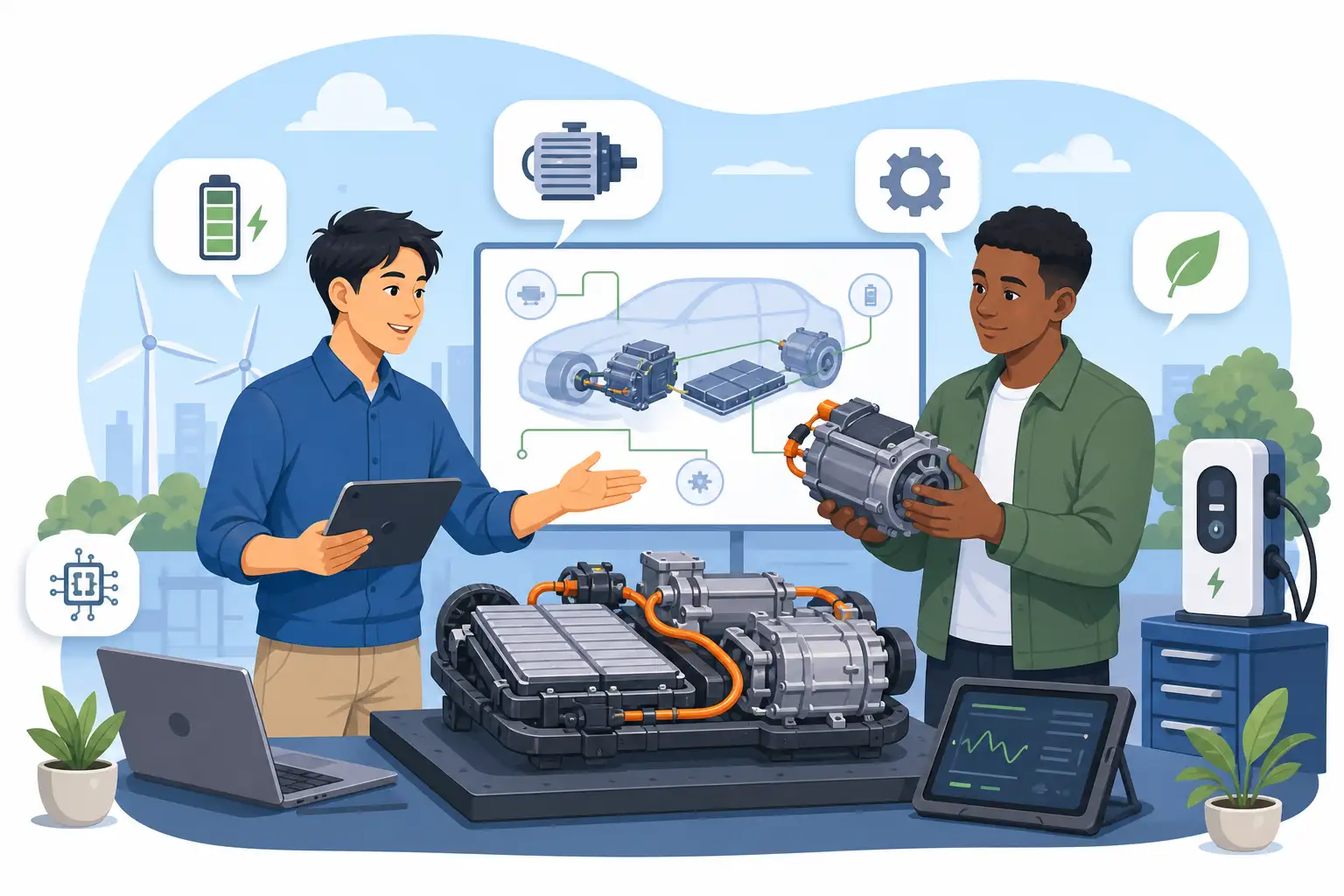
EV powertrains cover the integrated design and operation of traction motors, inverters, gear reduction, battery interface, and control software that deliver propulsion. This capability matters for meeting performance, efficiency, and safety targets while ensuring manufacturability, thermal reliability, and serviceability.
A professional with strong ev powertrains can:

Specify Motor, Inverter, And Gearbox Architectures To Meet Torque, Speed, Efficiency, And Packaging Requirements.
Develop Control Strategies For Torque Request, Regenerative Braking, And Fault Handling Across Drive Cycles.
Design Thermal Management Approaches For Motor/inverter Operation, Including Cooling Paths And Derating Limits.
Validate Powertrain Performance And Safety Using Dyno Testing, Calibration Data, And HV Isolation/functional Safety Checks.
Meets Vehicle Torque, Acceleration, And Top-speed Targets Through Correct Motor/inverter Sizing.
Achieves Efficiency And Range Goals By Optimizing Regen, Switching Losses, And Drivetrain Ratios.
Prevents Thermal Derating And Component Damage With Robust Cooling And Temperature Limits.
Ensures High-voltage Safety And Fault Handling Through Isolation Checks And Functional Safety Validation.

Automotive Manufacturing
Electronics & Electrical Manufacturing
Machinery & Heavy Equipment Manufacturing
Utilities (Electric Power & Water)
Information Technology & Software
Scientific & Research Organizations

Manufacturing Engineer
Mechanical Design Engineer
Industrial Automation Engineer
Maintenance Engineer
Plant Manager
Quality Engineer
Electrical Engineer
Electronics Test Engineer
Traction Motor Types And Control (FOC, Torque/speed Maps).
Inverter Design Basics And Switching Device Selection (IGBT/SiC) Considerations.
Gear Reduction And Driveline Integration, NVH, And Packaging Constraints.
Thermal Management Design For Motor, Inverter, And Coolant Circuits.
Dyno Testing, Calibration Workflows, And HV Safety/ISO 26262 Fundamentals.