
Determine Which Permits And Reporting Rules Apply Before Construction, Drilling, Mining, Or Waste Operations Begin.

Environmental regulations involves interpreting and applying laws, permits, and standards that control impacts to air, water, land, and wildlife. It matters because it keeps projects legally compliant, reduces fines and shutdown risk, and builds trust with regulators and communities across high-impact operations.
A professional with strong environmental regulations can:

Identify Applicable Federal, State, And Local Requirements For A Site Or Project And Translate Them Into Actionable Compliance Obligations.
Prepare And Maintain Permit Documentation, Monitoring Records, And Regulatory Reports That Withstand Audit And Inspection Scrutiny.
Conduct Compliance Inspections And Risk Assessments To Detect Gaps, Document Findings, And Recommend Corrective And Preventive Actions.
Advise Operations And Project Teams On Control Measures (e.g., Spill Prevention, Waste Handling, Emissions Limits) To Meet Permit Conditions And Standards.
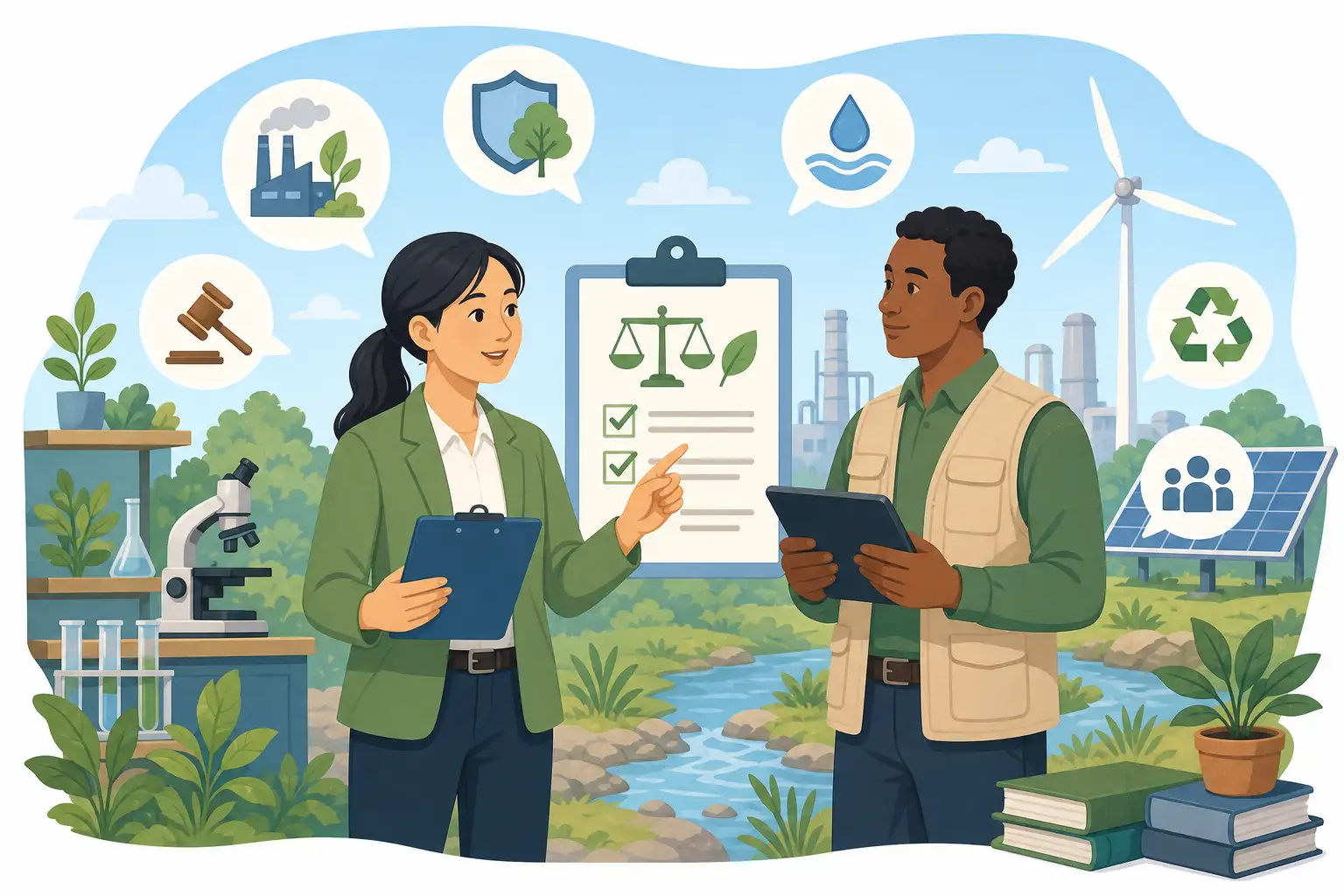
Determine Which Permits And Reporting Rules Apply Before Construction, Drilling, Mining, Or Waste Operations Begin.
Maintain Audit-ready Monitoring Data And Documentation For Inspections, Renewals, And Enforcement Inquiries.
Implement Spill Prevention, Waste Handling, And Emissions Controls Required By Permit Conditions And Standards.
Avoid Fines, Stop-work Orders, And Remediation Costs By Closing Compliance Gaps Identified In Inspections.

Environmental Services & Waste Management
Government & Public Administration
Mining & Minerals
Oil & Gas (Petroleum & Natural Gas)
Construction & Civil Engineering
Utilities (Electric Power & Water)

Environmental Compliance Officer
Environmental Engineer
Recycling Operations Manager
Sustainability Manager
Waste Management Supervisor
HSE Officer
Risk Assessment Specialist
Safety & Compliance Officer
Permit Application And Renewal Management For Air, Water, And Waste Programs.
Environmental Monitoring And Sampling Methods For Effluent, Emissions, And Stormwater.
Regulatory Reporting And Recordkeeping Systems (e.g., Manifests, Logs, Compliance Calendars).
Compliance Auditing, Inspection Checklists, And Corrective Action Tracking.
Hazardous Waste, Spill Response, And Pollution Prevention Practices Aligned To Regulations.