
Uncover Real User Pain Points Through Interviews And Observation, Not Assumptions.

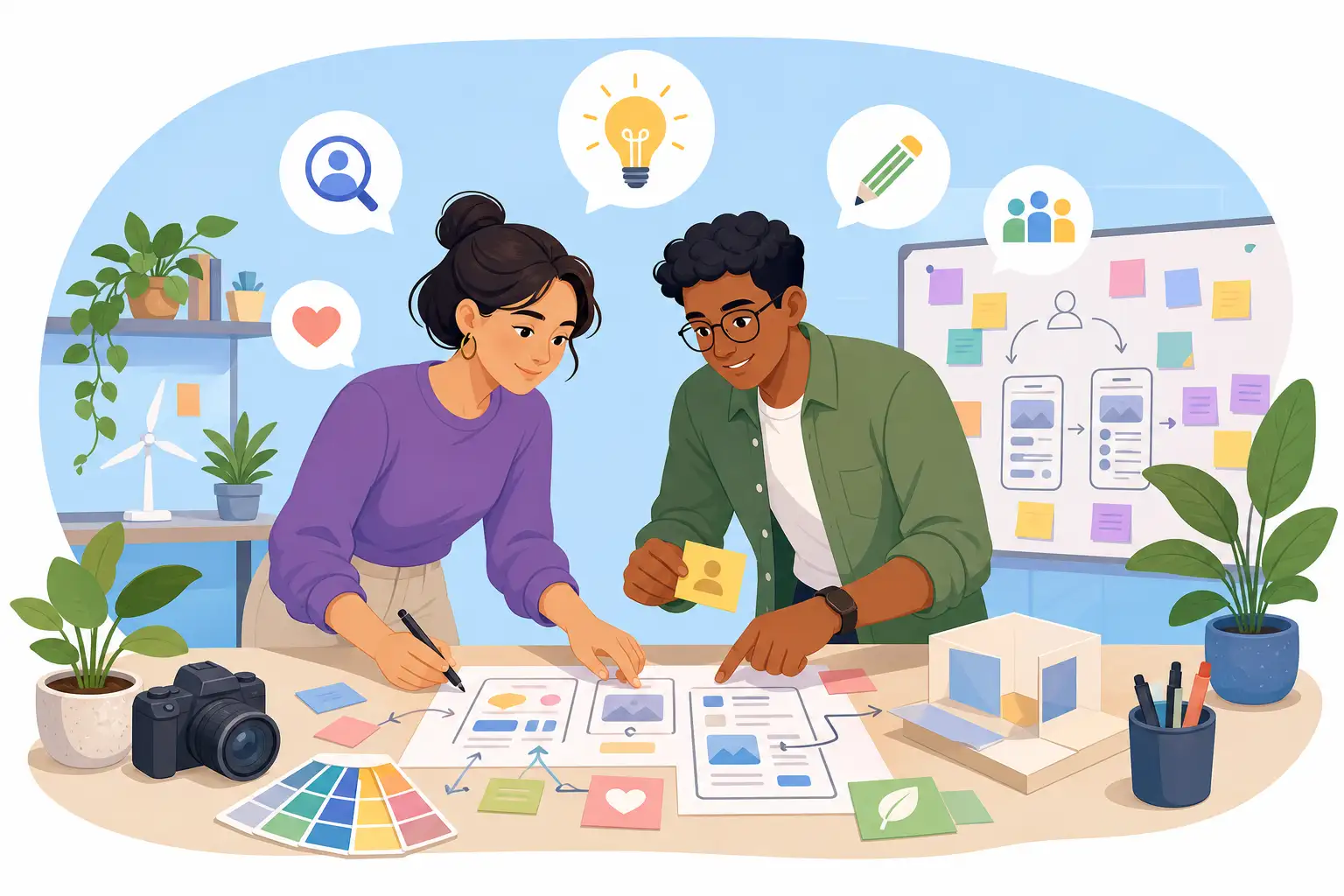
Design thinking is a human-centered approach to solving problems by deeply understanding user needs, generating options, and iterating through prototypes and feedback. It matters because it improves solution fit, reduces rework, and helps teams align on priorities when requirements are uncertain or competing.
A professional with strong design thinking can:

Conduct Interviews Or Observations To Uncover User Goals, Pain Points, And Constraints.
Synthesize Insights Into Personas, Journey Maps, And Clear Problem Statements.
Facilitate Ideation Sessions And Prioritize Concepts Using Feasibility, Impact, And Risk Criteria.
Build Low-fidelity Prototypes And Run Tests To Validate Assumptions And Refine The Solution.
Uncover Real User Pain Points Through Interviews And Observation, Not Assumptions.
Align Teams On A Clear Problem Statement When Requirements Are Vague Or Conflicting.
Reduce Costly Build Cycles By Validating Ideas With Quick Prototypes And Tests.
Prioritize Solutions Using Feasibility And Impact Evidence From User Feedback.

Consulting & Professional Services
Education & Training
Government & Public Administration
Scientific & Research Organizations
Information Technology & Software
Logistics & Supply Chain Management

Business Analyst
Management Consultant
Corporate Trainer
Program Manager
Operations Manager
Process Improvement Specialist
Research Scientist
Public Administrator
User Research Methods Such As Interviews, Surveys, And Contextual Inquiry.
Synthesis Tools Like Personas, Journey Maps, And Problem Statements.
Facilitation Techniques For Ideation Workshops And Stakeholder Sessions.
Rapid Prototyping With Sketches, Wireframes, And Clickable Mockups.
Usability Testing Planning, Feedback Capture, And Iteration Based On Findings.