
Limits Breach Impact By Enforcing Least Privilege, MFA, And Secure Configuration Baselines.

Cybersecurity principles guide how systems and data are protected through sound design, configuration, and operational discipline. They matter in IT and telecom environments because they reduce the likelihood and impact of breaches, support regulatory compliance, and keep critical services available and trustworthy.
A professional with strong cybersecurity principles can:

Perform Risk Assessments To Identify Threats, Vulnerabilities, And Likely Attack Paths Across Networks And Applications.
Implement Core Controls Such As Least Privilege, MFA, Secure Configuration Baselines, And Network Segmentation.
Analyze Security Logs And Alerts To Detect Anomalous Behavior And Escalate Potential Incidents Quickly.
Document Security Requirements And Control Evidence To Support Audits, Incident Post-mortems, And Change Approvals.
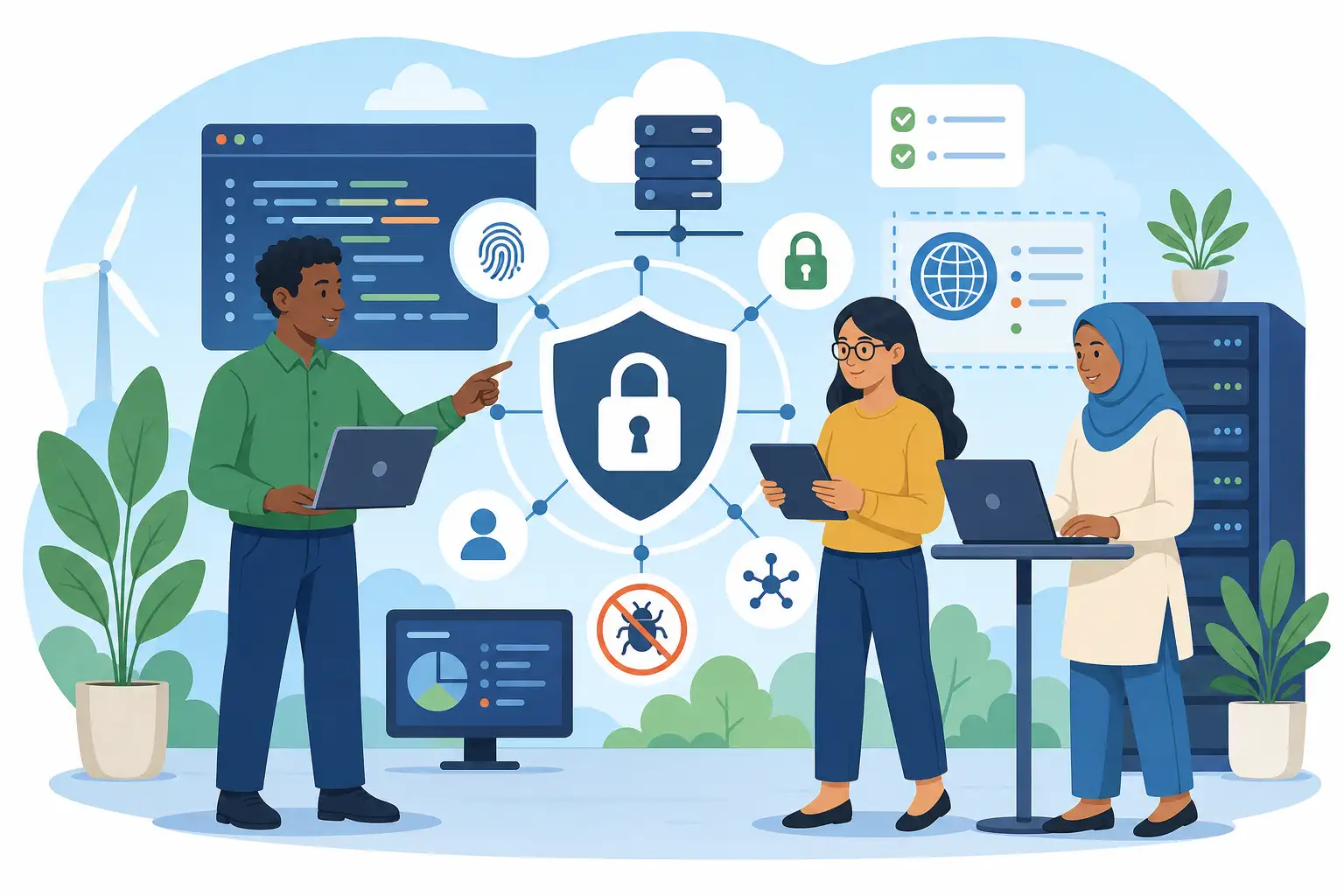
Limits Breach Impact By Enforcing Least Privilege, MFA, And Secure Configuration Baselines.
Prevents Lateral Movement By Segmenting Networks And Isolating Critical Services.
Enables Rapid Detection Of Intrusions Through Log Review And Alert Triage.
Provides Audit-ready Evidence For Standards Like ISO 27001, SOC 2, And Regulatory Controls.

Cybersecurity & IT Security
Information Technology & Software
Telecommunications
Data Science & Artificial Intelligence
Consulting & Professional Services
Government & Public Administration

Security Analyst
Security Engineer
Security Architect
Penetration Tester
Incident Response Manager
Network Engineer
NOC Engineer
Telecom Project Manager
Threat Modeling And Risk Assessment Methods.
Identity And Access Management Administration (RBAC, MFA, PAM).
Secure Network Design With Segmentation, Firewalls, And Zero-trust Concepts.
Security Monitoring With SIEM Queries And Alert Investigation.
Security Control Documentation And Audit Evidence Collection.