
Reduce Account Takeovers By Enforcing MFA And Least-privilege Access.

Cybersecurity and IT security fundamentals cover how to protect systems, networks, and data using core principles like confidentiality, integrity, and availability. They matter because they help teams prevent breaches, reduce operational risk, and respond quickly and consistently when security events occur.
A professional with strong cybersecurity & it security fundamentals can:

Identify Common Threats And Attack Vectors Across Endpoints, Networks, And Cloud Services.
Implement Baseline Controls Such As Least Privilege, MFA, Secure Configuration, And Patch Hygiene.
Interpret Security Logs And Alerts To Triage Suspicious Activity And Escalate Incidents Appropriately.
Document Security Requirements And Communicate Risk Impacts To Technical And Non-technical Stakeholders.
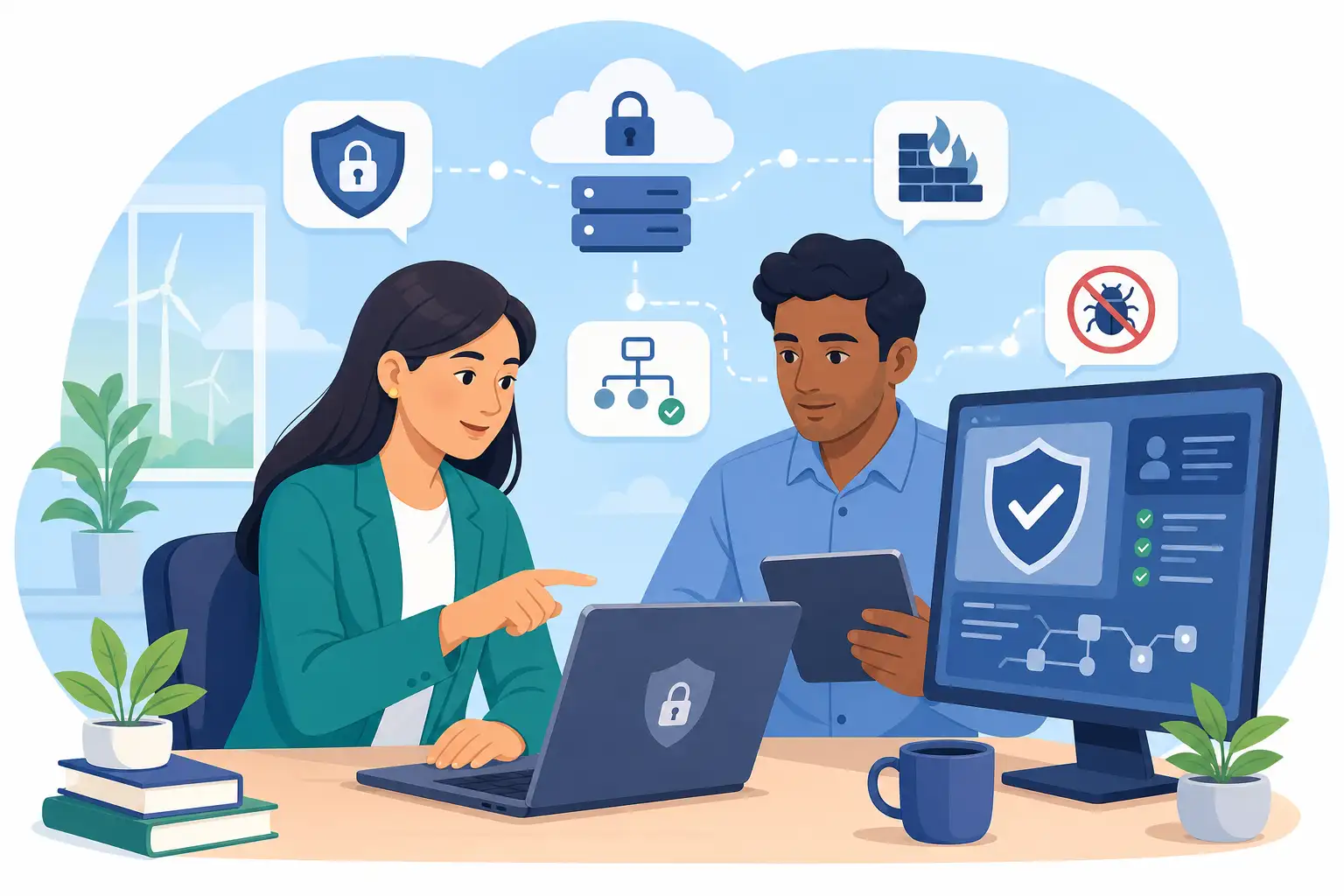
Reduce Account Takeovers By Enforcing MFA And Least-privilege Access.
Prevent Ransomware And Exploit Chains Through Timely Patching And Secure Configuration.
Triage Suspicious Activity By Interpreting SIEM Logs And Endpoint Alerts.
Limit Breach Impact By Following Consistent Incident Escalation And Containment Steps.

Cybersecurity & IT Security
Information Technology & Software
Telecommunications
Data Science & Artificial Intelligence
Consulting & Professional Services
Government & Public Administration

Security Analyst
Security Engineer
Security Architect
Penetration Tester
Incident Response Manager
Network Engineer
NOC Engineer
Telecom Project Manager
Threat Modeling And Common Attack Vectors Knowledge.
Identity And Access Management Practices, Including RBAC And MFA.
Secure Configuration Baselines For Endpoints, Servers, And Cloud Services.
Vulnerability Management, Scanning, And Patch Lifecycle Coordination.
Log Analysis Using SIEM/EDR Tools And Basic Incident Handling Workflows.