
Prevents Yield Loss By Timing Planting, Irrigation, And Nutrition To Crop Growth Stages.

Crop cycles involve understanding the timing and biological stages of crops from planting through harvest, including how weather, soil conditions, and variety selection affect growth. This matters for planning labor, irrigation, and inputs, achieving target yields and quality, and aligning harvest windows with storage and supply chain capacity.
A professional with strong crop cycles can:

Develop Season Calendars That Map Planting Dates, Growth Stages, And Expected Harvest Windows By Crop And Field.
Monitor Phenological Indicators And Weather Data To Adjust Irrigation, Fertilization, And Field Operations Timing.
Plan Labor, Equipment, And Storage Requirements Around Peak Workload Periods To Avoid Bottlenecks At Harvest.
Record And Analyze Yield And Quality Outcomes By Season To Refine Variety Choice And Future Scheduling.
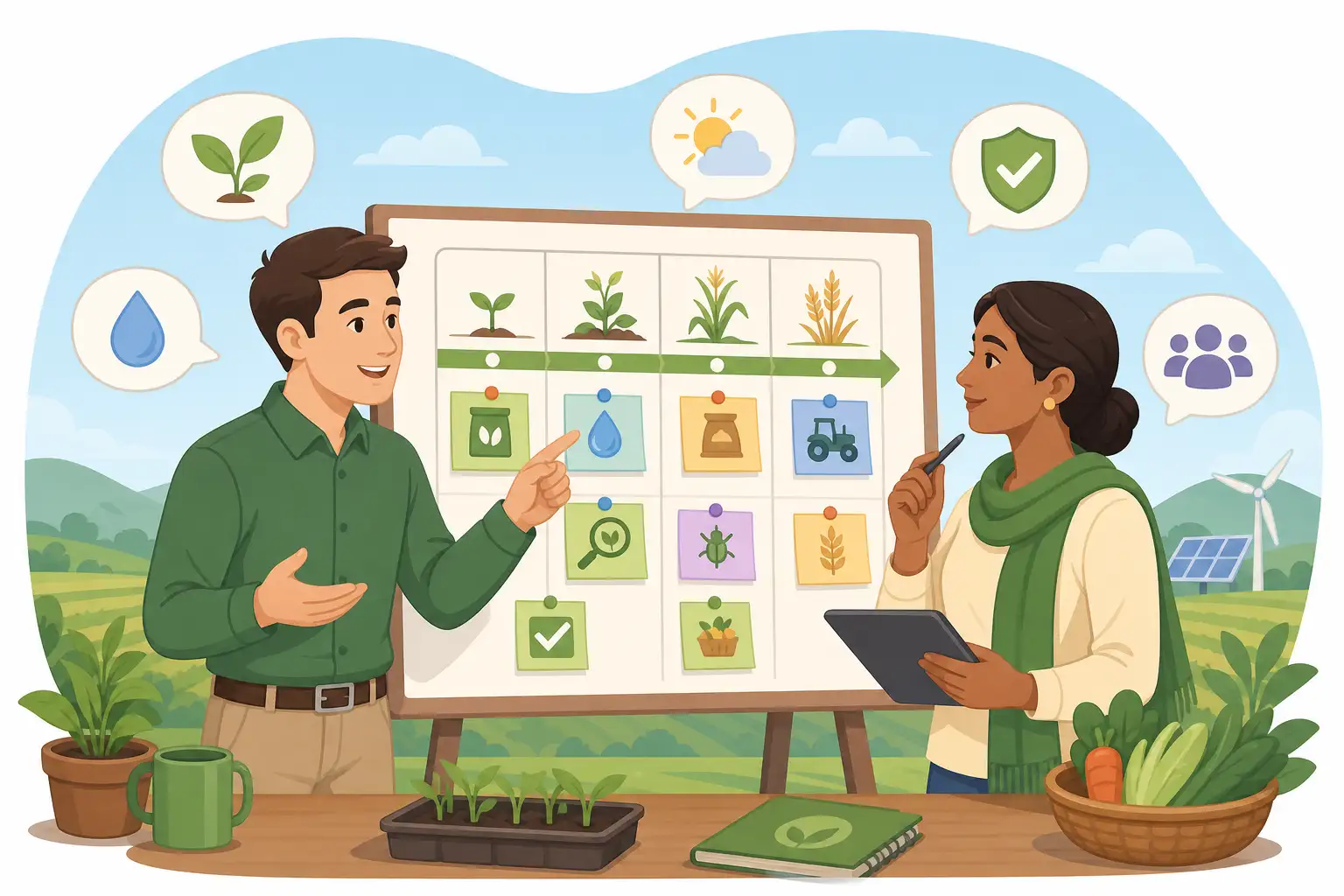
Prevents Yield Loss By Timing Planting, Irrigation, And Nutrition To Crop Growth Stages.
Avoids Harvest Bottlenecks By Aligning Labor, Equipment, And Storage To Peak Windows.
Improves Quality By Scheduling Pest Control And Harvest Around Maturity And Weather Risk.
Supports Supply Commitments By Forecasting Harvest Dates And Volumes By Field And Variety.

Agriculture & Agribusiness
Food & Beverage Manufacturing
Environmental Services & Waste Management
Scientific & Research Organizations
Government & Public Administration
Logistics & Supply Chain Management

Farm Manager
Agronomist
Agricultural Engineer
Crop Consultant / Agricultural Advisor
Agribusiness Supply Chain Manager
Agricultural Research Scientist
Sustainability Manager
Food Technologist
Phenology And Growth-stage Identification For Major Crops.
Weather Monitoring, Degree-day Tracking, And Frost/heat Risk Planning.
Field Scouting And Crop Condition Assessment.
Seasonal Labor, Equipment, And Harvest Logistics Planning.
Yield Mapping And Season-to-season Performance Analysis.