
Select Ingredient Systems That Hit Target Sensory Feel, Cleansing, And Conditioning Performance.

Cosmetics and personal care fundamentals involve understanding formulation basics, ingredient functions, stability, safety, and the regulated claims that can be made for products. This matters because it supports effective R&D and quality decisions while protecting consumers and ensuring products meet performance, labeling, and compliance expectations.
A professional with strong cosmetics & personal care fundamentals can:

Select And Balance Key Ingredient Types (e.g., Surfactants, Emollients, Preservatives) To Achieve Target Sensory And Performance Profiles.
Plan And Interpret Stability, Compatibility, And Microbiological Testing To Confirm Shelf-life And Packaging Fit.
Assess Product Claims And Labels Against Cosmetic Regulations, Safety Assessments, And Substantiation Requirements.
Troubleshoot Common Quality Issues Such As Separation, Viscosity Drift, Odor Change, Or Irritation Risk Using Root-cause Logic.
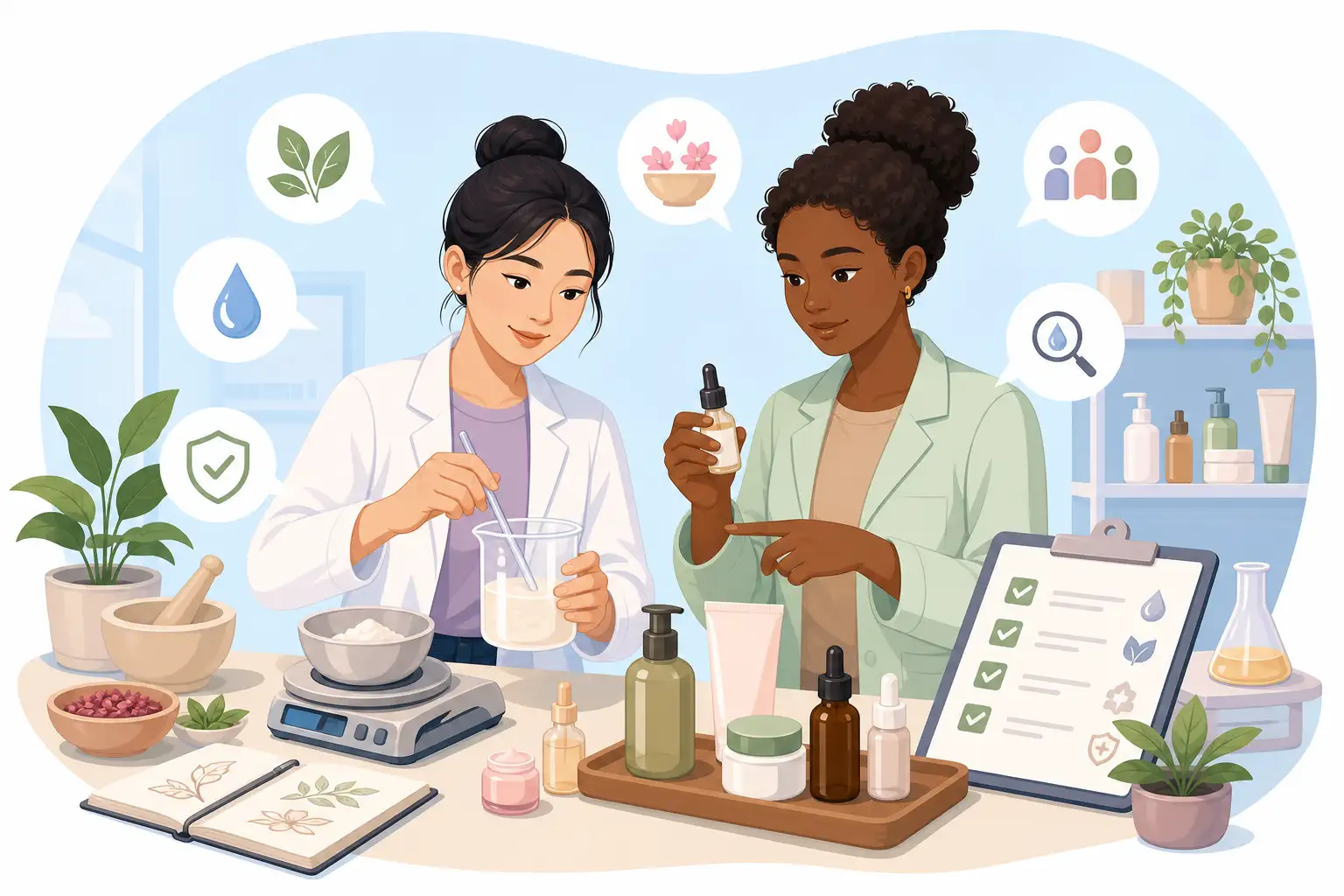
Select Ingredient Systems That Hit Target Sensory Feel, Cleansing, And Conditioning Performance.
Interpret Stability And Microbiology Results To Confirm Shelf-life And Packaging Compatibility.
Avoid Non-compliant Or Unsupported Claims By Aligning Labels To Cosmetic Regulations And Substantiation.
Troubleshoot Separation, Viscosity Drift, Odor Changes, And Irritation Risks Before Products Ship.

Pharmaceuticals & Biotechnology
Scientific & Research Organizations
Healthcare & Hospitals
Medical Devices & Equipment
Chemical & Petrochemical Manufacturing
Cosmetics & Personal Care

Bioprocess Engineer
Clinical Trial Manager
Formulation Chemist
Research Scientist
Laboratory Manager
Quality Control Chemist
Cosmetic Chemist
Regulatory Affairs Specialist
Ingredient Functionality Knowledge For Surfactants, Emulsifiers, Humectants, And Preservatives.
Formulation Methods For Emulsions, Gels, And Surfactant-based Systems.
Stability, Compatibility, And Microbial Challenge Testing Protocols.
Regulatory And Labeling Knowledge For Cosmetic Claims And Safety Substantiation.
Analytical And QC Tools Such As PH, Viscosity, Microscopy, And Sensory Evaluation.