
Spot Constructability And Scope Gaps In Drawings Before They Become Change Orders On Site.

Construction and civil engineering fundamentals involve understanding how built assets are designed, specified, constructed, and maintained, including materials, loads, site conditions, and basic codes. This knowledge matters because it improves planning, safety, and quality while reducing costly rework and miscommunication across designers, contractors, and owners.
A professional with strong construction & civil engineering fundamentals can:

Interpret Drawings And Specifications To Identify Constructability Issues, Scope Gaps, And Site Constraints.
Estimate Quantities And Sequencing Impacts For Earthworks, Concrete, Steel, And Utilities Installation.
Verify That Planned Methods Align With Basic Code Requirements, Tolerances, And Safety Controls On Site.
Communicate Technical Issues (e.g., Drainage, Settlement, Load Paths) In Plain Language To Non-engineering Stakeholders.
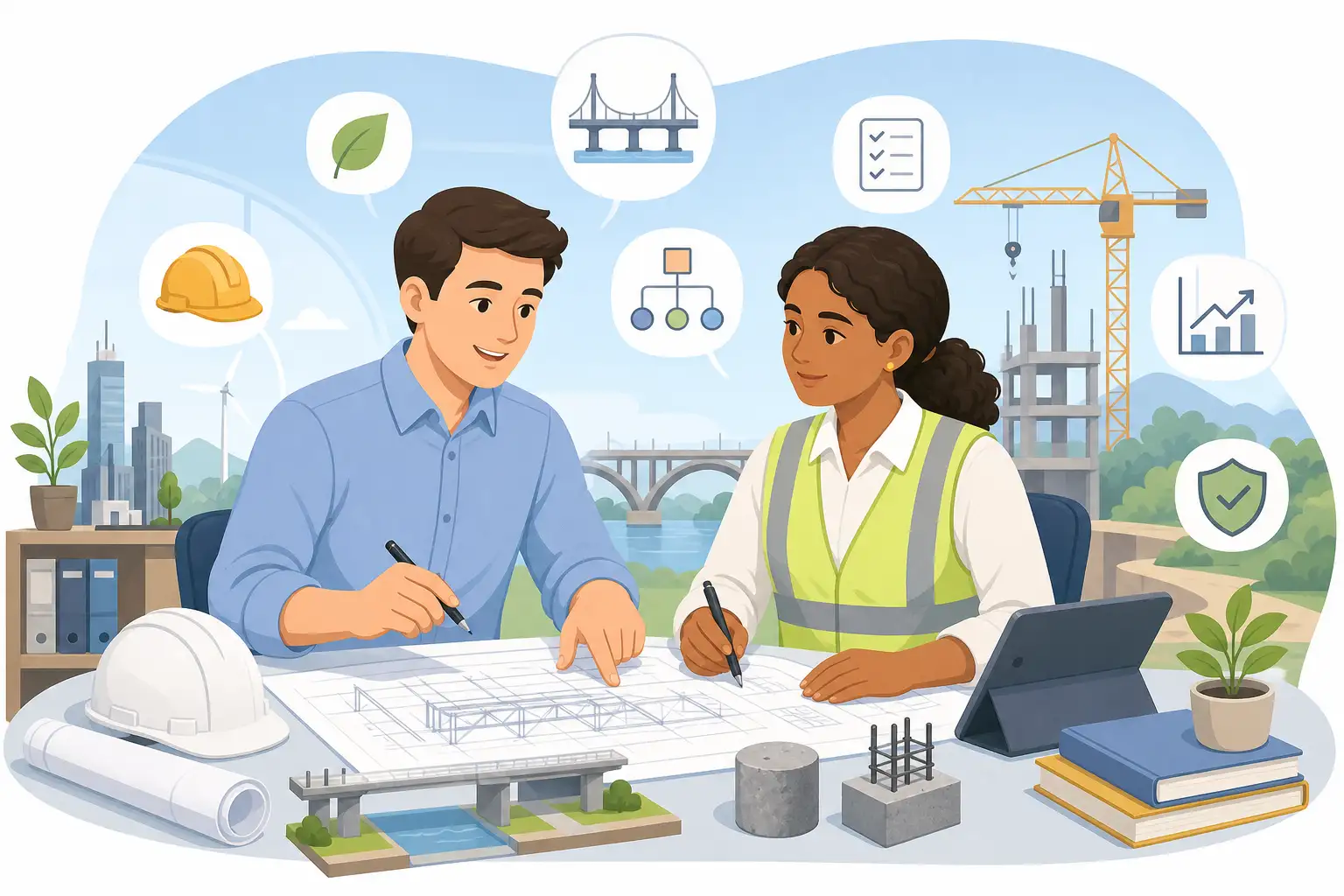
Spot Constructability And Scope Gaps In Drawings Before They Become Change Orders On Site.
Estimate Quantities And Sequencing Impacts To Prevent Schedule Clashes Between Trades And Utilities.
Check Proposed Methods Against Basic Code, Tolerances, And Safety Controls To Avoid Unsafe Installs.
Explain Drainage, Settlement, And Load-path Risks In Plain Language To Owners And Non-technical Stakeholders.

Construction & Civil Engineering
Real Estate & Property Management
Utilities (Electric Power & Water)
Government & Public Administration
Consulting & Professional Services
Environmental Services & Waste Management

Civil Engineer
Construction Project Manager
Quantity Surveyor
Site Supervisor
Structural Designer
Property Manager
Facilities Manager
Real Estate Development Manager
Reading And Interpreting Plans, Sections, Details, And Specifications.
Materials Knowledge For Concrete, Steel, Asphalt, Soils, And Aggregates.
Basic Geotechnical And Site-condition Assessment For Excavation And Foundations.
Quantity Takeoff And Construction Sequencing For Earthworks And Utilities.
Working Knowledge Of Building Codes, QA/QC Tolerances, And Site Safety Practices.