


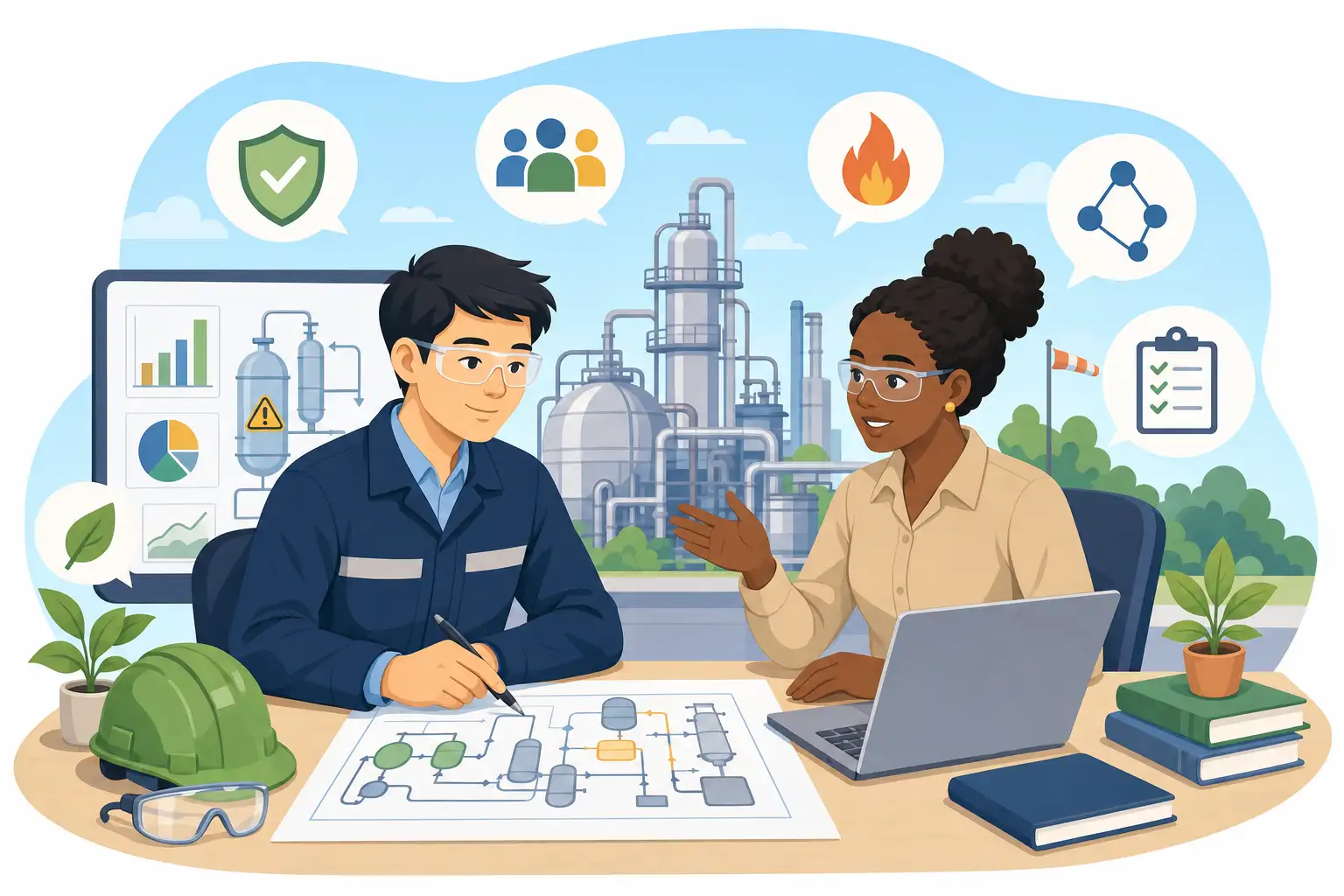
Bachelor's Degree In Engineering Or A Related Technical Field. Professional Licensure (e.g., PE) May Be Required Or Beneficial. Experience With CAD Software And Simulation Tools Is Often Essential.

Chemical Engineer
A Chemical Engineer is responsible for contributing to production of chemicals, polymers, and industrial compounds. This role involves working across key areas such as Chemical & Petrochemical Manufacturing Systems Engineering, Technical Problem Solving, while applying technical knowledge in chemical process safety, distillation principles, reactor design, lab analysis, process control.